
Trace the numbers to 100
A hundred numbers is not one sheet and should not pretend to be. Choose the stretch your child is actually on — the twenties, the forties, the ones that keep going wrong — and print just those.
- Letter & A4, portrait or landscape
- Real stroke centerlines, not outlines
- Change the size and reprint
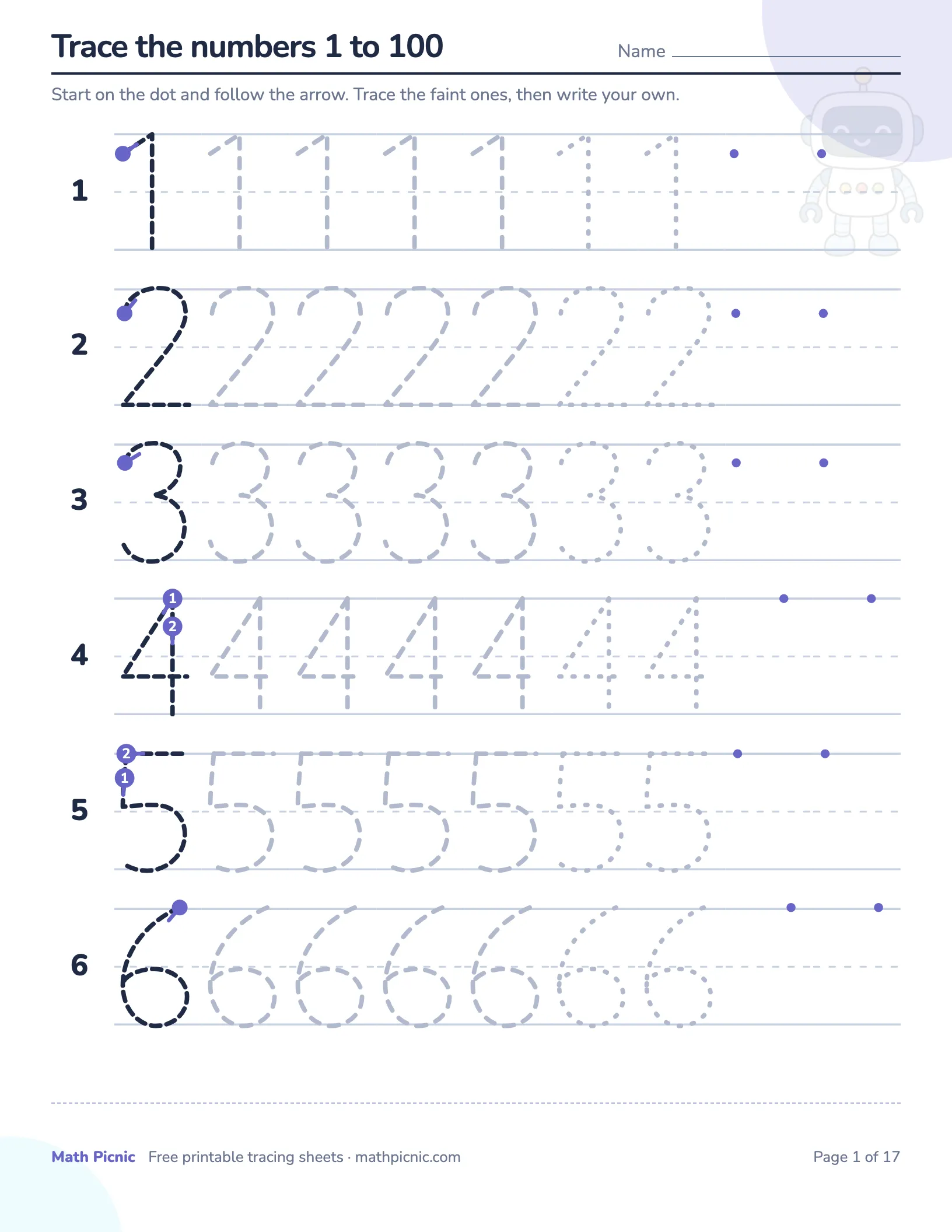

Trace the numbers 1 to 100
NameStart on the dot and follow the arrow. Trace the faint ones, then write your own.
This is page one of 17 at the default size. Open it in the maker to print the rest, choose a range, or fit more on a page.
About this sheet
Nobody traces a hundred numbers. What a child does is get stuck somewhere specific: the thirties reverse, the sevens in the seventies come out backwards, or every number after 60 is written as it sounds. A sheet of all one hundred buries that inside ninety-odd numbers they already know, and the practice that mattered gets three cells of it. So the maker takes a range rather than a preset, and "41to50" is a perfectly good thing to type into the link.
Why it is drawn this way
Three-digit spacing is the one place these sheets make a visible compromise. Every character is drawn to the same cap height, so a two-digit number is wider than a one-digit one and "100" is wider again; when the widest number in the range no longer fits the cell at full height, the whole sheet steps down slightly so that every row still matches. That keeps the writing consistent, which matters more here than squeezing the last millimeter out of the tallest digit.