
Trace the numbers 21 to 50
Past the teens, where the pattern finally becomes regular: thirty rows of two digits, and the only thing left to learn is doing it the same way every time.
- Letter & A4, portrait or landscape
- Real stroke centerlines, not outlines
- Change the size and reprint
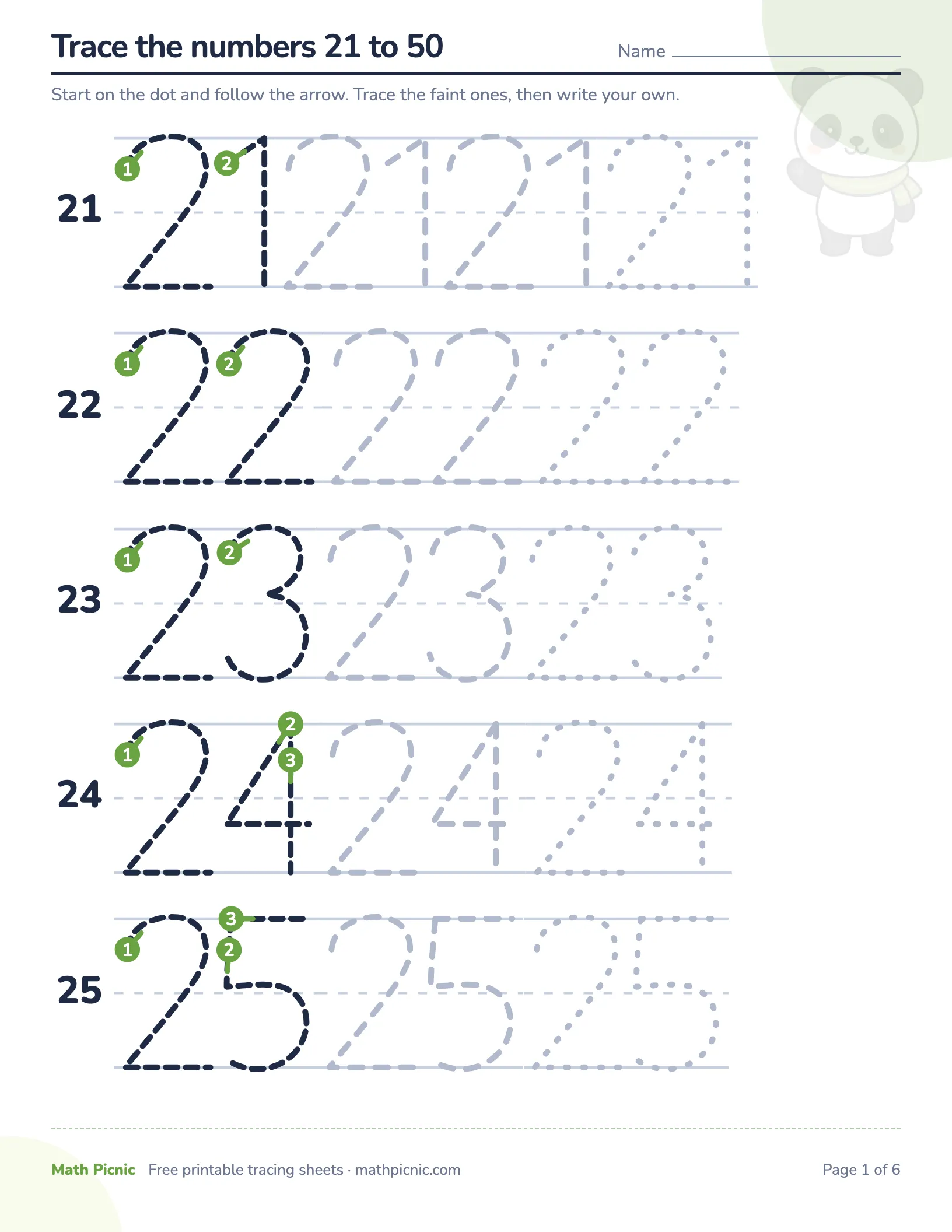

Trace the numbers 21 to 50
NameStart on the dot and follow the arrow. Trace the faint ones, then write your own.
This is page one of 6 at the default size. Open it in the maker to print the rest, choose a range, or fit more on a page.
About this sheet
Twenty-one onwards is the first stretch where the names and the digits agree. Twenty-one is said in the order it is written, and so is every number after it, which makes this range the easy half of two-digit writing even though the numbers are bigger — the hard part was 11 to 20. What this sheet is really practicing is consistency: the same digit made the same way in the tens place and the ones place, thirty times.
Why it is drawn this way
It is also where the decade digit changes under a child's hand for the first time. Going from 29 to 30 means the left-hand digit moves while the right-hand one returns to zero, and a child who writes a column of these in order sees that happen three times on one sheet. The rows are in order for that reason, and it is worth stopping at each turn rather than treating it as thirty unrelated numbers.