EstimatingTo the nearest ten
Name: Date:
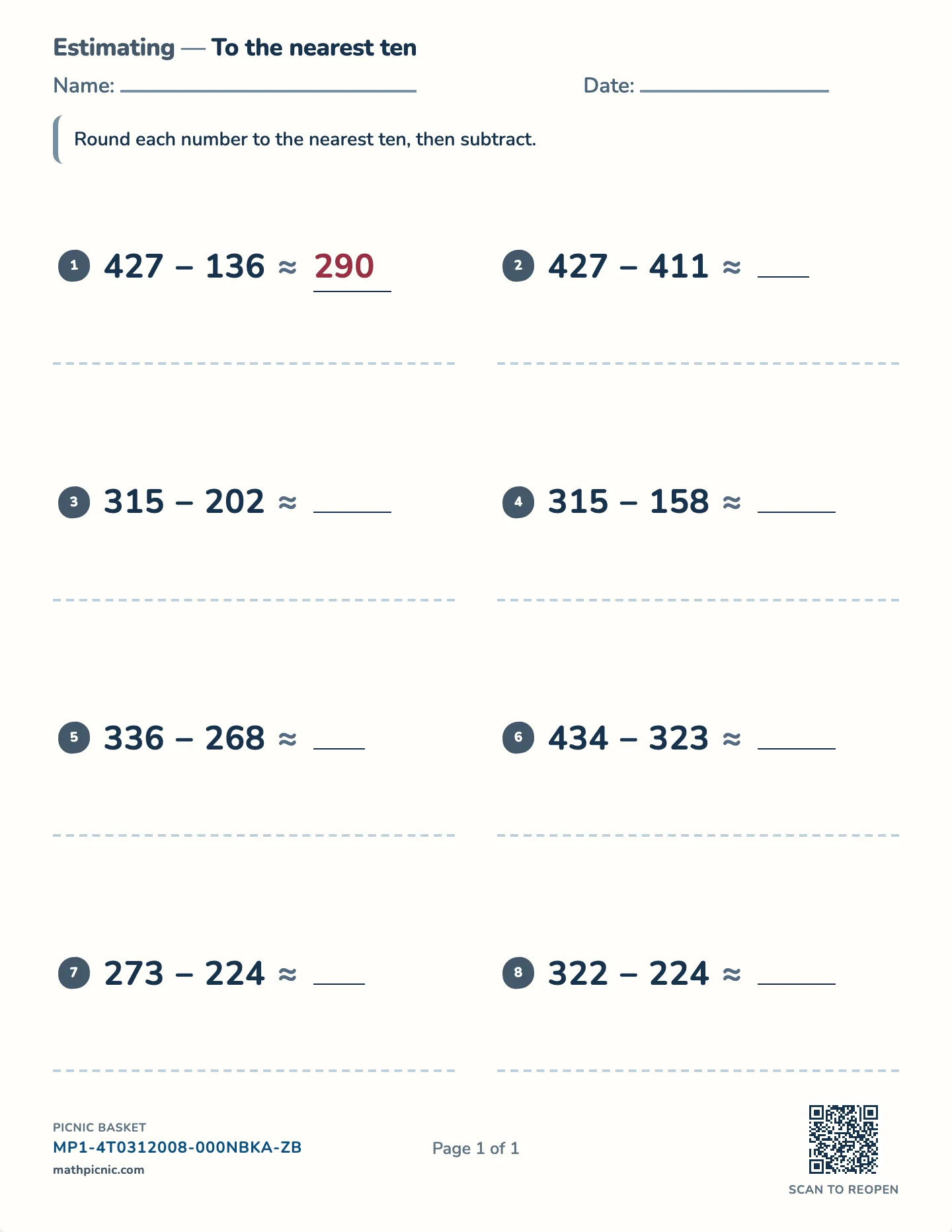
Round each number to the nearest ten, then subtract.
1427 − 136
2427 − 411
3315 − 202
4315 − 158
5336 − 268
6434 − 323
7273 − 224
8322 − 224

Estimating a difference means rounding both numbers first, then subtracting the friendly pair — 487 − 213 becomes 490 − 210, which is 280 and takes a moment. These free printable sheets keep to that one operation.
If they get stuck
The answer key prints on a separate page.
Round first, then subtract — and the instruction says so, because the two orders do not agree. Rounding 487 − 213 gives 490 − 210 = 280, while subtracting first gives 274 → 270, and both are defensible. A printed sheet cannot hold two right answers, so it names the one it wants, which is also the one the standard means: an estimate is what you work out instead of the calculation, not a tidying-up afterwards.
The numbers are three digits, big enough that estimating earns its place. 8 − 3 rounds to 10 − 0, and a child who can take 3 from 8 has no reason to estimate anything; the exact answer here needs borrowing, so a quick 280 really is faster. Every number needs a decision too — none is already sitting on a ten — and the rounding never makes the two numbers equal, because 600 − 600 asks nothing at all.
One question from a sheet like this one, worked a step at a time — with a sentence saying what just happened and why.
Estimating differences, step by step