EstimatingTo the nearest ten
Name: Date:
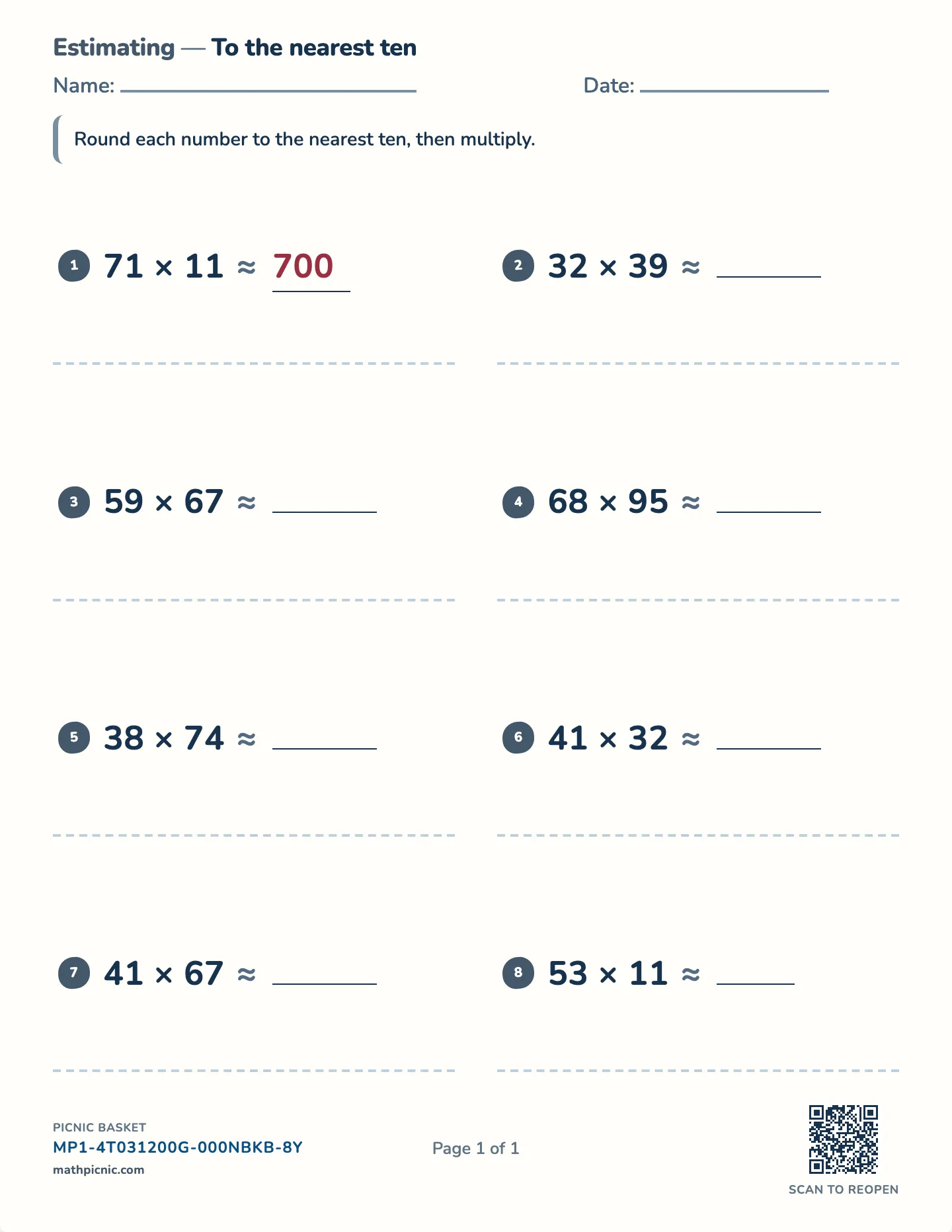
Round each number to the nearest ten, then multiply.
171 × 11
232 × 39
359 × 67
468 × 95
538 × 74
641 × 32
741 × 67
853 × 11

Estimating a product means rounding each number to the nearest ten, then multiplying — 83 × 32 becomes 80 × 30, which is 2,400 and takes a moment. These free printable sheets keep to that one operation.
If they get stuck
The answer key prints on a separate page.
Round each number to the nearest ten first, then multiply. A product always rounds to tens, not hundreds, because two rounded tens already give a tidy answer: 80 × 30 is 2,400 in one step, where the exact 83 × 32 needs a written method. That gap is the whole argument for the skill — the estimate is genuinely faster, and it tells you at a glance whether a long multiplication has landed anywhere near right.
Both numbers are two digits and neither is already round. 20 × 88 would round to 20 × 90, where half the question is done before the child arrives and the untouched 20 reads as though it were an answer to something. Every number on the page needs a decision, so the practice is choosing the nearest ten many times, not reading one off.
One question from a sheet like this one, worked a step at a time — with a sentence saying what just happened and why.
Estimating products, step by step