
Rounding rules
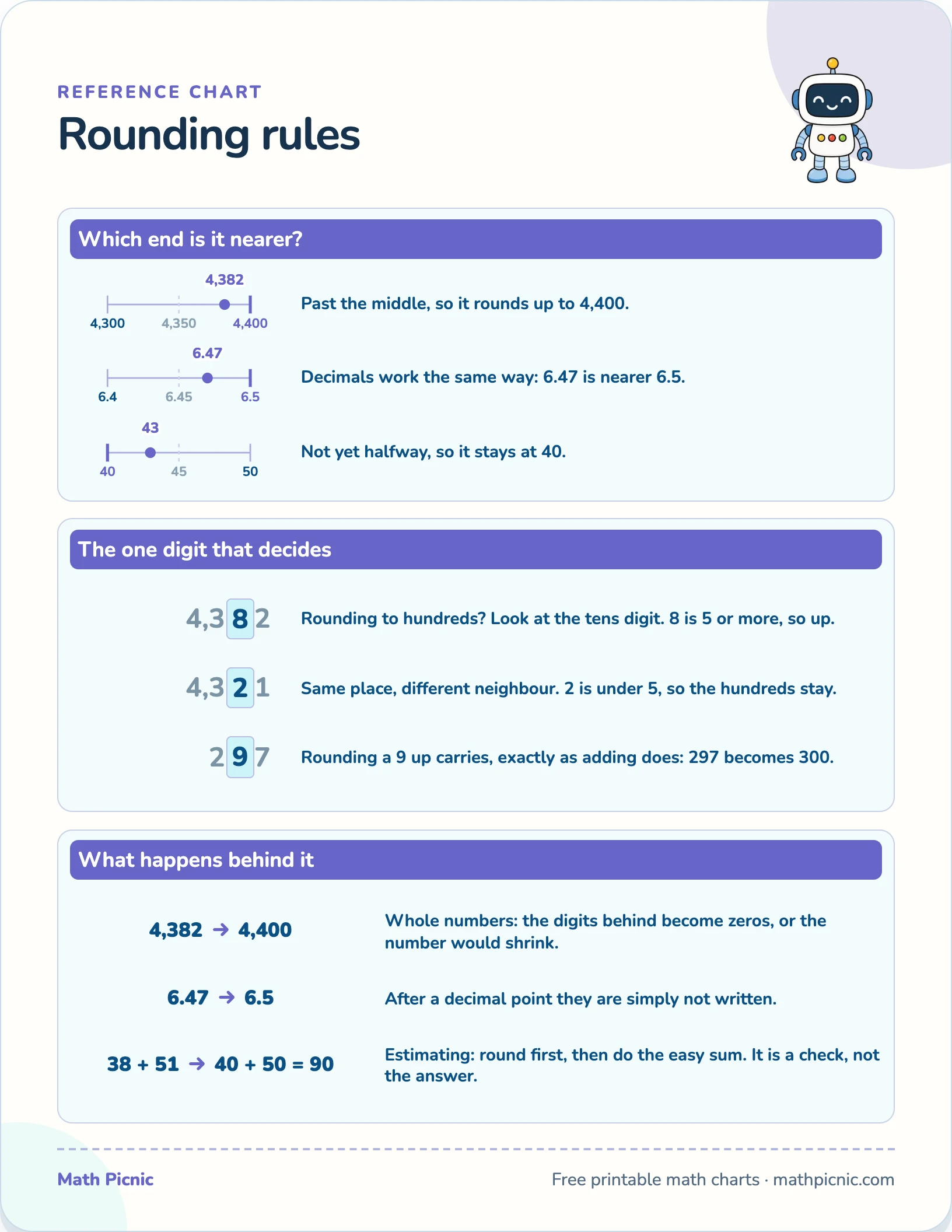
Rounding as three steps rather than one instruction, because "round 4,382 to the nearest hundred" can fail in three different places and only the last one is the rule anybody teaches.
Reference chart
Rounding rules

Which end is it nearer?
- Past the middle, so it rounds up to 4,400.
- Decimals work the same way: 6.47 is nearer 6.5.
- Not yet halfway, so it stays at 40.
The one digit that decides
- 4,382Rounding to hundreds? Look at the tens digit. 8 is 5 or more, so up.
- 4,321Same place, different neighbor. 2 is under 5, so the hundreds stay.
- 297Rounding a 9 up carries, exactly as adding does: 297 becomes 300.
What happens behind it
- 4,382→4,400Whole numbers: the digits behind become zeros, or the number would shrink.
- 6.47→6.5After a decimal point they are simply not written.
- 38 + 51→40 + 50 = 90Estimating: round first, then do the easy sum. It is a check, not the answer.
What's on this chart
Everyone learns "five or more rounds up." Almost nobody is taught the two steps before it, which is where the errors actually happen: finding the place being rounded to, and then looking at the one digit immediately to its right. A child who rounds 4,382 to the nearest hundred by looking at the 2, or by rounding the tens column instead, has applied the famous rule perfectly and still has the wrong answer.
Why this chart helps
The second group answers the question that follows. Rounding 4,382 to the nearest hundred gives 4,400, not 44 — the digits behind the place become zeros rather than disappearing, because the number has to stay the size it was. After a decimal point the opposite is true and they are simply not written, which looks like an inconsistency until you notice that both rules are saying the same thing: keep the value, drop the detail.
More printable charts
- Mental math tricks
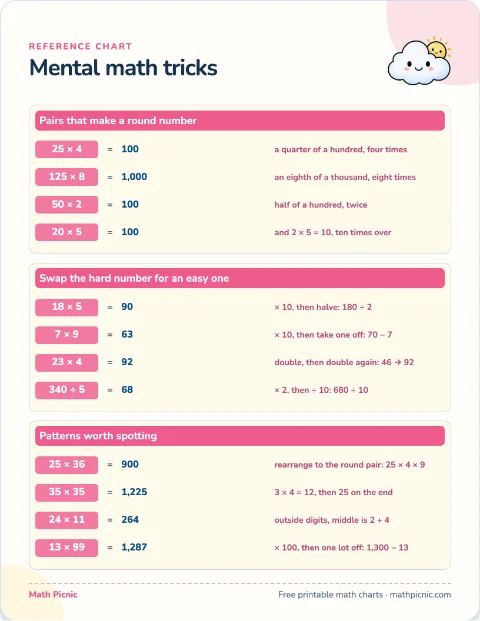 Print Swap the hard number for an easy one before you start calculating.
 - Divisibility rules
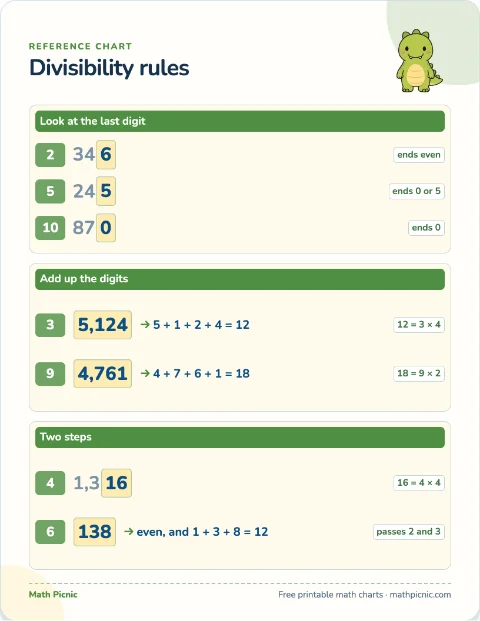 Print Run one quick test in their head instead of starting a division.
 - Fraction rules
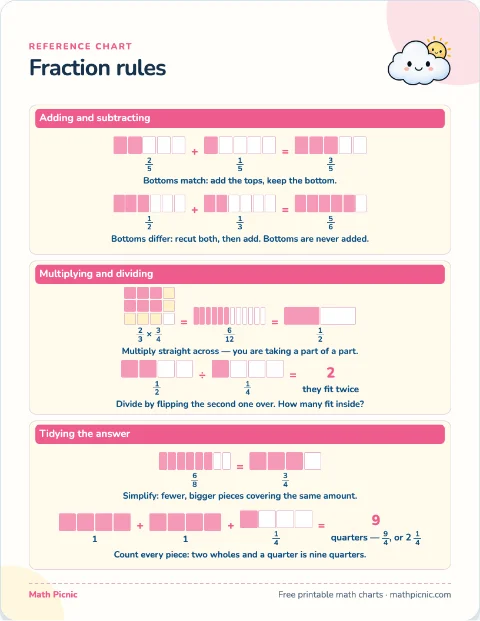 Print Check a fraction answer against the rule before doing the arithmetic.
 - Measurement conversions
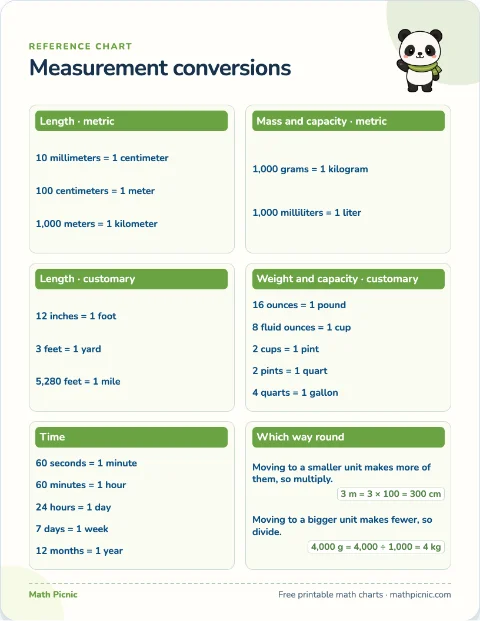 Print Look the conversion up, then decide whether to multiply or divide.
 - Order of operations
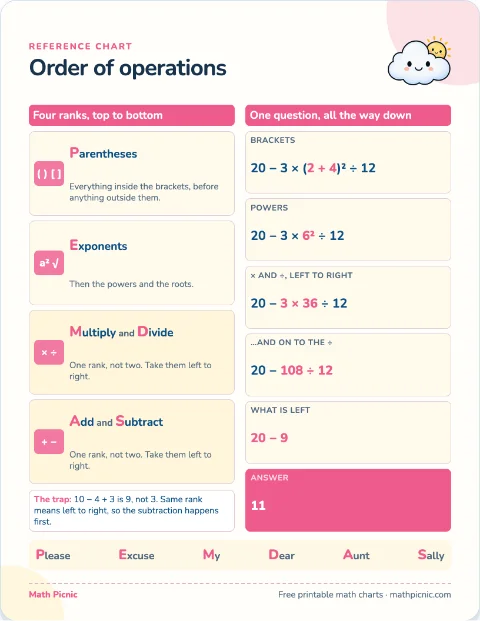 Print Work down the ranks, taking each one left to right before the next.
 - Positive and negative numbers
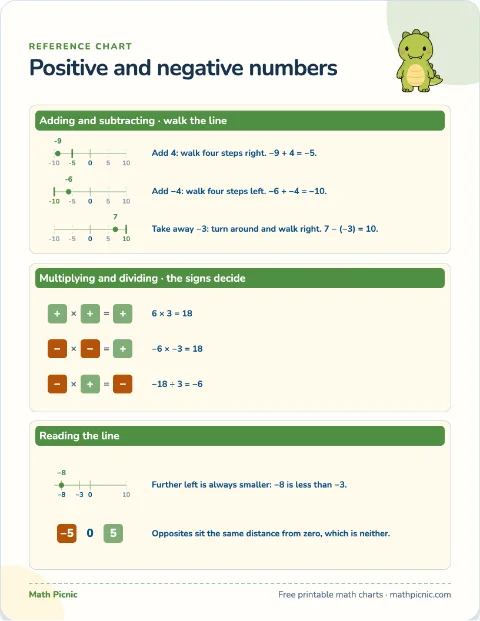 Print Check which operation you are doing before deciding the answer's sign.
 - Laws of exponents
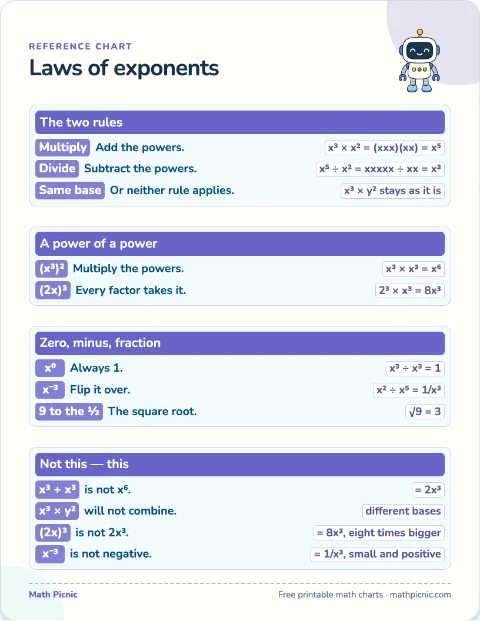 Print Find the operation you have, and the example shows where the rule comes from.
 - Scientific notation
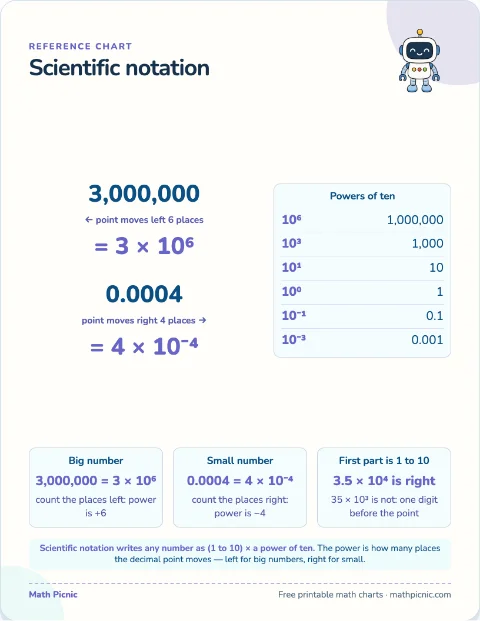 Print Move the decimal point to a number between 1 and 10, then count the places as the power.