
Laws of exponents
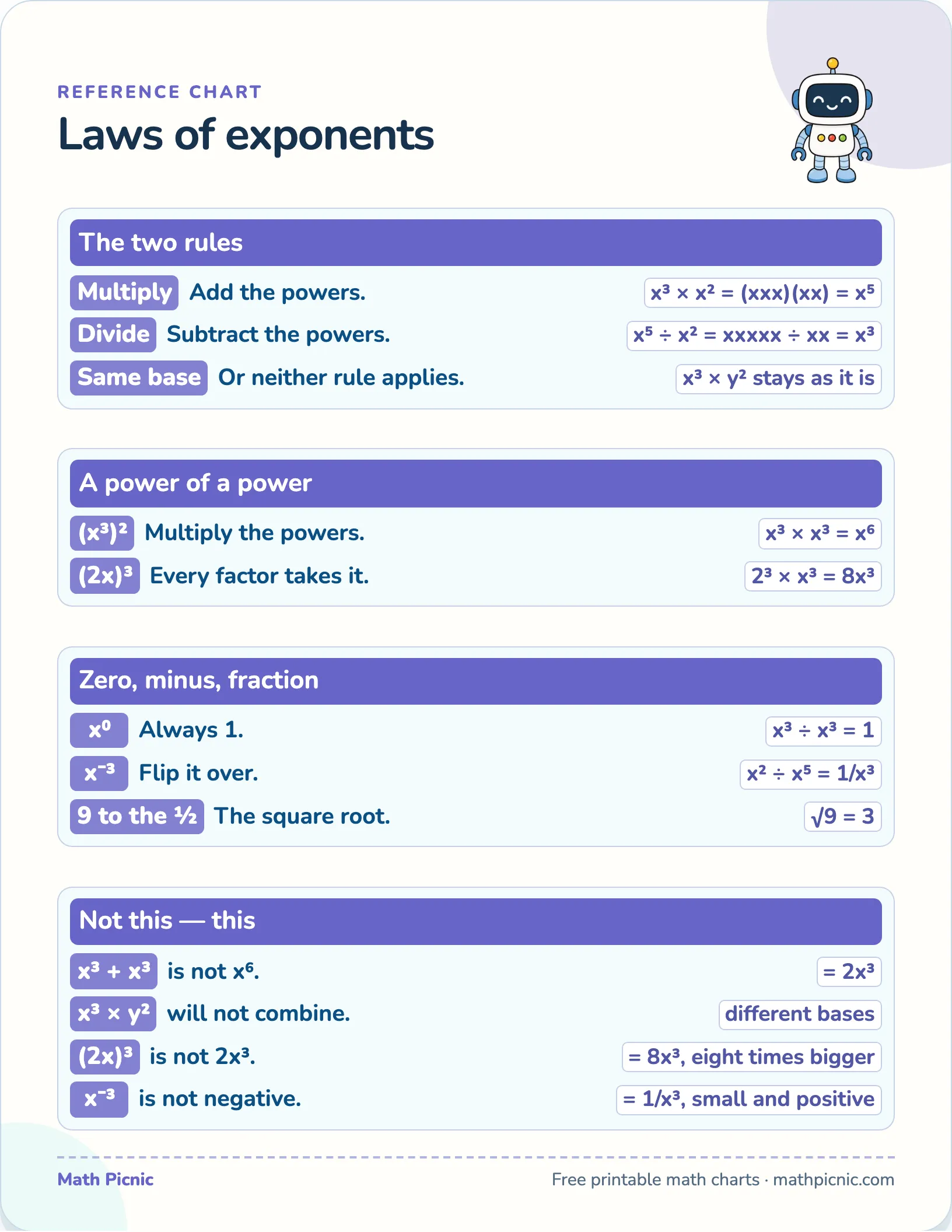
Two rules and five consequences, each printed with the working it falls out of — because a rule a child has watched appear is one they can rebuild when they forget it.
Reference chart
Laws of exponents

The two rules
- MultiplyAdd the powers.x³ × x² = (xxx)(xx) = x⁵
- DivideSubtract the powers.x⁵ ÷ x² = xxxxx ÷ xx = x³
- Same baseOr neither rule applies.x³ × y² stays as it is
A power of a power
- (x³)²Multiply the powers.x³ × x³ = x⁶
- (2x)³Every factor takes it.2³ × x³ = 8x³
Zero, minus, fraction
- x⁰Always 1.x³ ÷ x³ = 1
- x⁻³Flip it over.x² ÷ x⁵ = 1/x³
- 9 to the ½The square root.√9 = 3
Not this — this
- x³ + x³is not x⁶.= 2x³
- x³ × y²will not combine.different bases
- (2x)³is not 2x³.= 8x³, eight times bigger
- x⁻³is not negative.= 1/x³, small and positive
What's on this chart
There are two laws here and everything else is arithmetic. Multiply powers of the same base and you add the exponents, because x³ × x² is three x's next to two x's. Divide and you subtract, because the ones on top cancel the ones underneath. That is the entire subject, and a child who holds those two can reconstruct the rest at the moment they need it.
Why this chart helps
So the rest are printed as consequences rather than as more lines to learn. x⁰ = 1 is what the division rule says about x³ ÷ x³, which is a thing a child can already see is 1 — and a child who has watched it fall out that way never writes x⁰ = 0, which is the single commonest error on the topic. A negative power is the same division run the other way: x² ÷ x⁵ is plainly 1/x³ by canceling, and the rule says x⁻³, so those two are the same thing and the minus sign never meant a negative answer. A power of a power is the multiply rule used more than once.
More printable charts
- Rounding rules
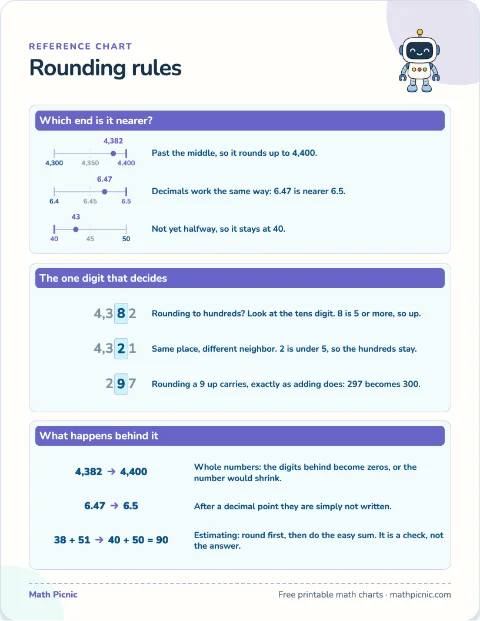 Print Find the place, look at the digit beside it, then decide.
 - Properties of operations
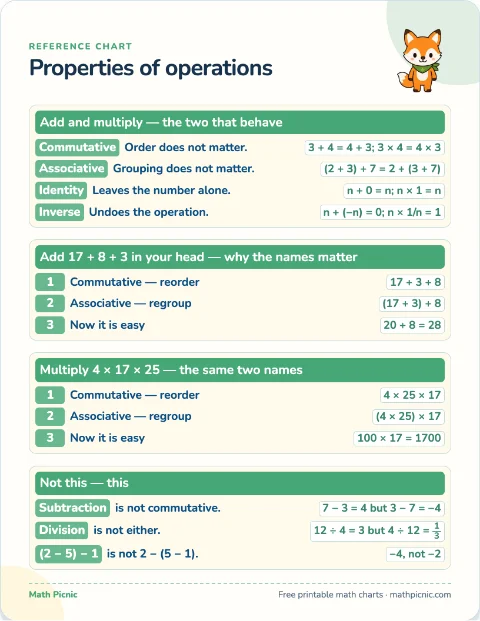 Print Name the property a step used, or find the one that makes a calculation easier.
 - The distributive property
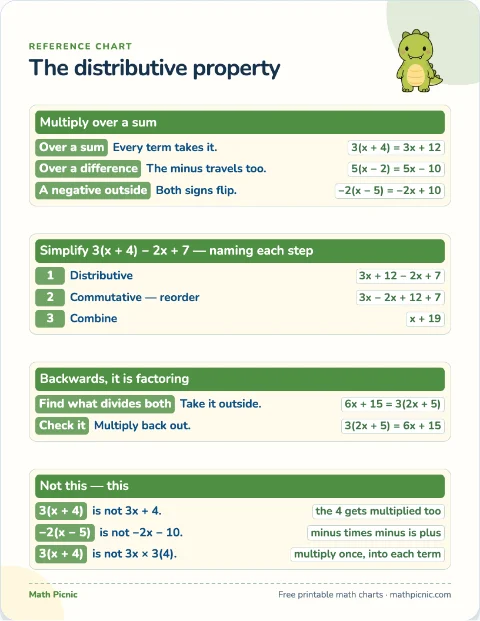 Print Expand a bracket term by term, or read the card backwards to factor.
 - Mental math tricks
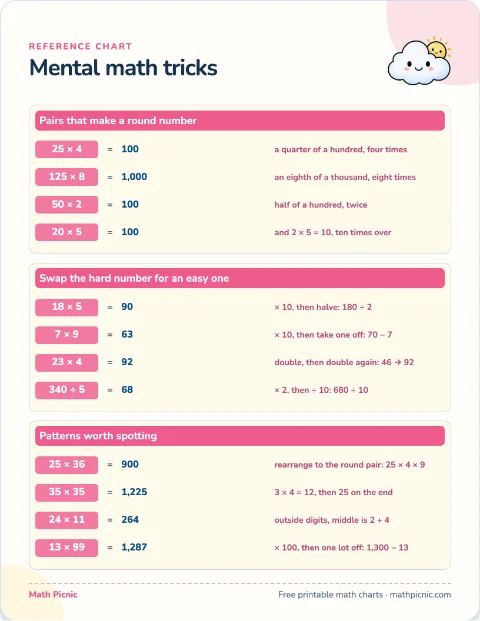 Print Swap the hard number for an easy one before you start calculating.
 - Divisibility rules
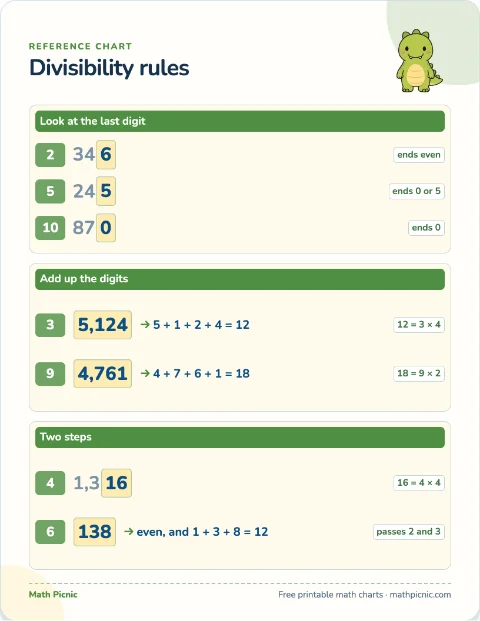 Print Run one quick test in their head instead of starting a division.
 - Fraction rules
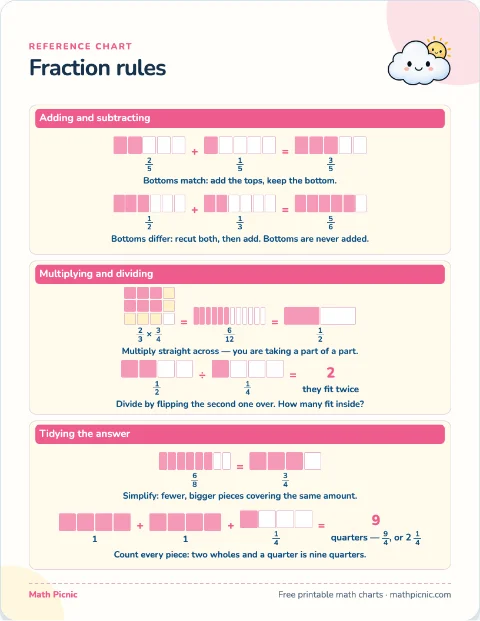 Print Check a fraction answer against the rule before doing the arithmetic.
 - Measurement conversions
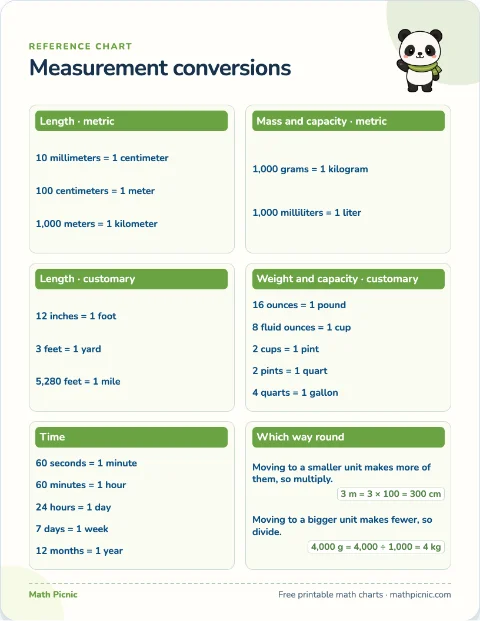 Print Look the conversion up, then decide whether to multiply or divide.
 - Order of operations
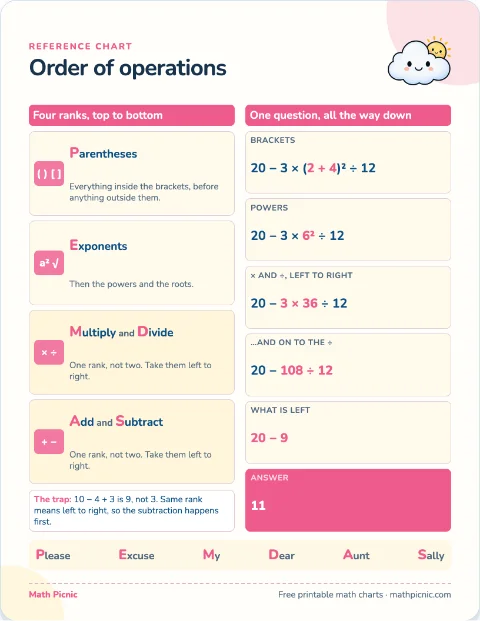 Print Work down the ranks, taking each one left to right before the next.