
Scientific notation
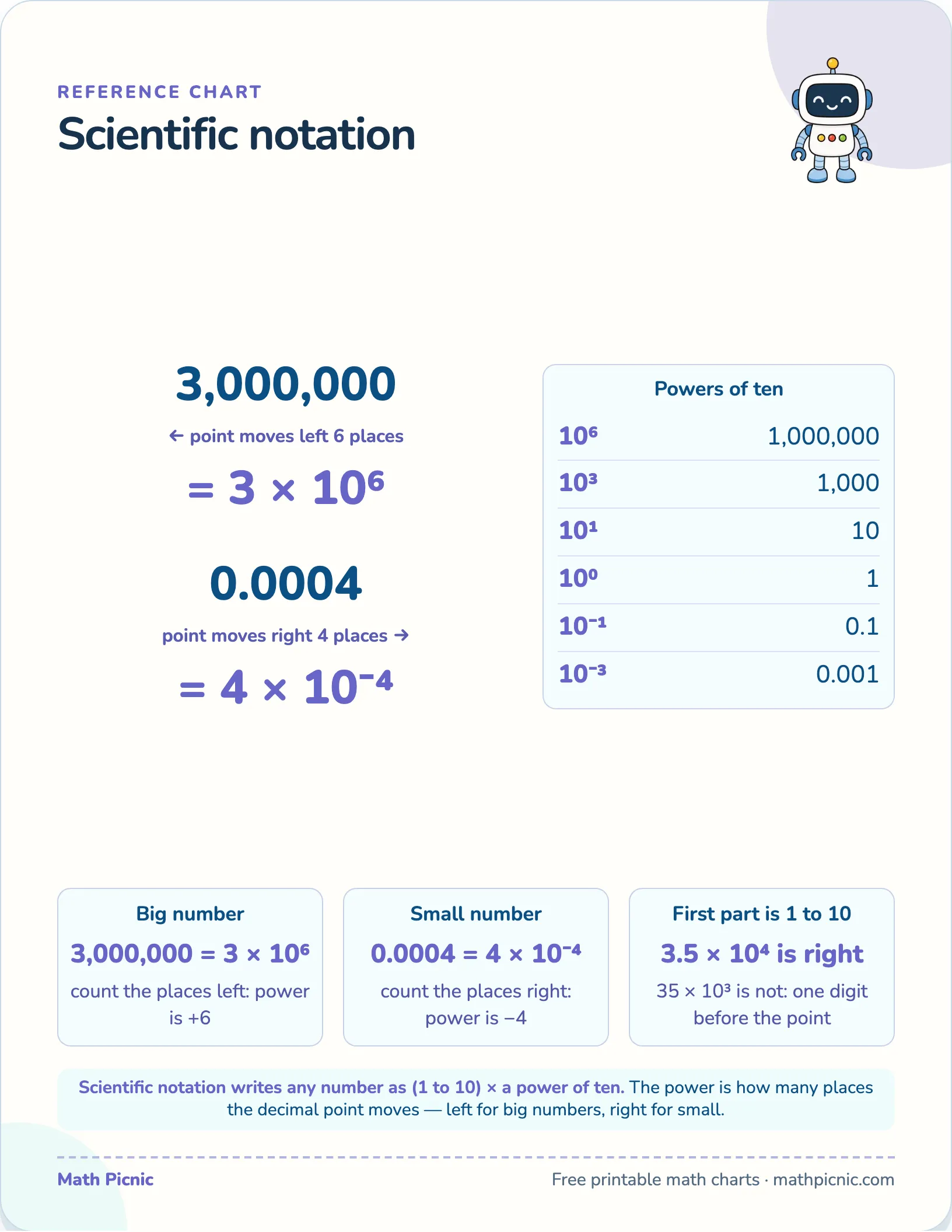
Scientific notation writes any number, however big or small, as a number between 1 and 10 times a power of ten. Three million becomes 3 × 10⁶; four ten-thousandths becomes 4 × 10⁻⁴. The power is simply how many places the decimal point has to move.
Reference chart
Scientific notation

Powers of ten
Big number
3,000,000 = 3 × 10⁶
count the places left: power is +6
Small number
0.0004 = 4 × 10⁻⁴
count the places right: power is −4
First part is 1 to 10
3.5 × 10⁴ is right
35 × 10³ is not: one digit before the point
Scientific notation writes any number as (1 to 10) × a power of ten. The power is how many places the decimal point moves — left for big numbers, right for small.
What's on this chart
The whole method is one move: slide the decimal point until exactly one non-zero digit sits in front of it, then count how far it slid. For a big number like 3,000,000 the point starts at the far right and moves left six places, so the power is +6 and the number is 3 × 10⁶. Counting the places IS finding the power — there is nothing else to work out.
Why this chart helps
Small numbers go the other way, and that is the only new idea. In 0.0004 the point moves right four places to sit after the 4, and moving right makes the power negative: 4 × 10⁻⁴. A negative power does not mean a negative number — it means a small one, a fraction, which is exactly what the laws-of-exponents chart shows. Left for big, right for small, and the sign of the power follows the direction.
More printable charts
- Rounding rules
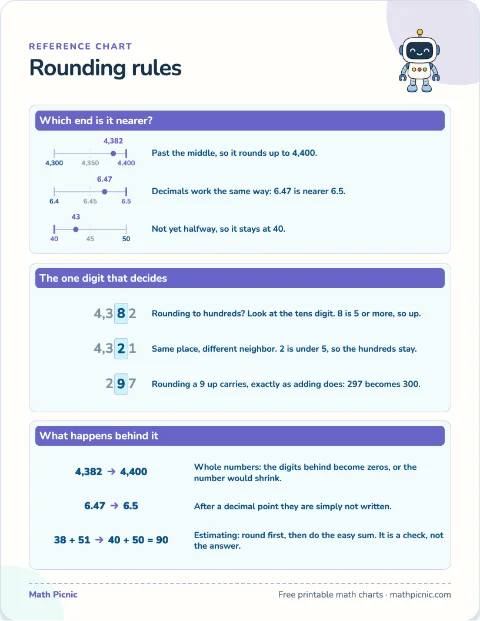 Print Find the place, look at the digit beside it, then decide.
 - Properties of operations
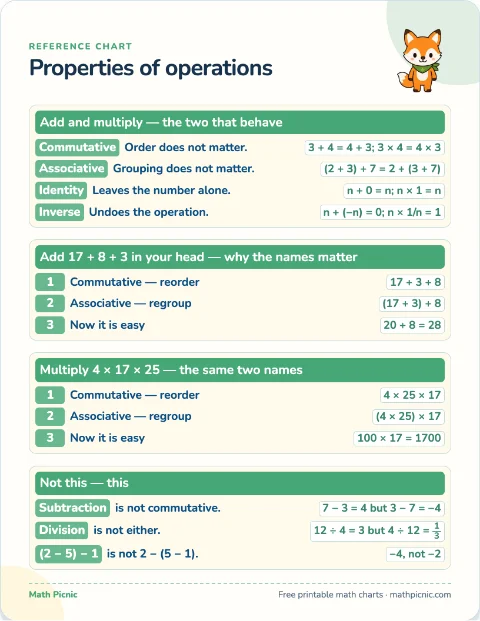 Print Name the property a step used, or find the one that makes a calculation easier.
 - The distributive property
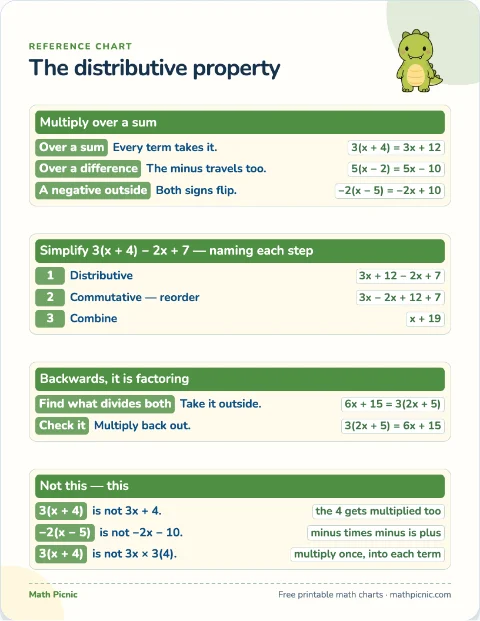 Print Expand a bracket term by term, or read the card backwards to factor.
 - Mental math tricks
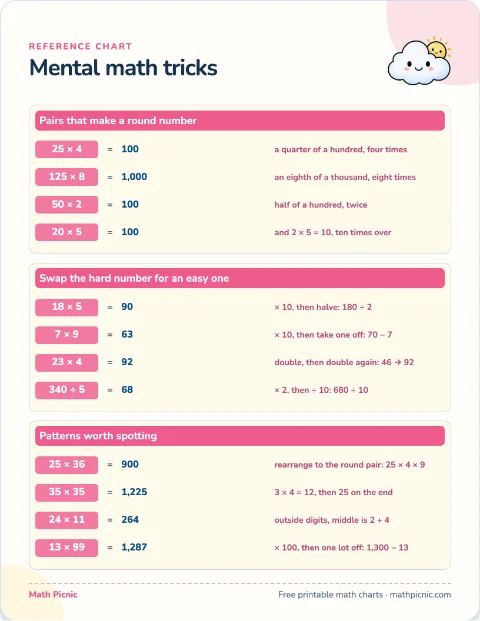 Print Swap the hard number for an easy one before you start calculating.
 - Divisibility rules
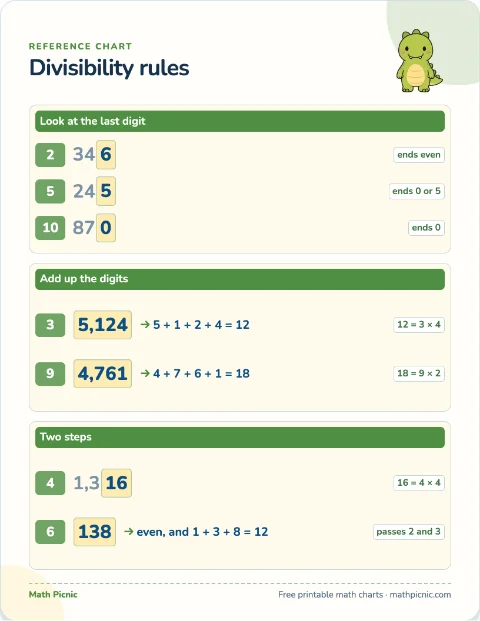 Print Run one quick test in their head instead of starting a division.
 - Fraction rules
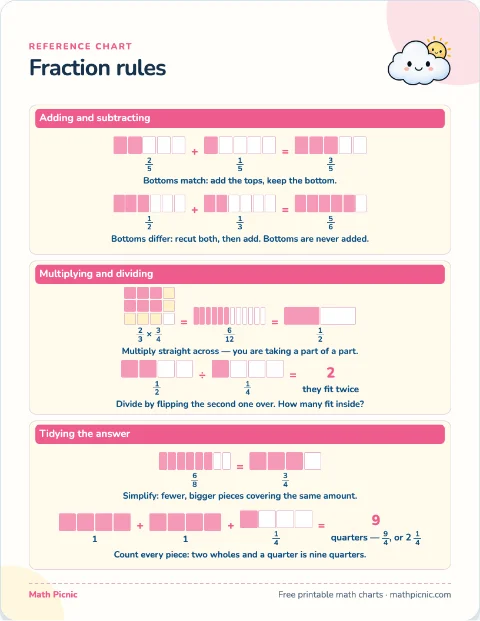 Print Check a fraction answer against the rule before doing the arithmetic.
 - Measurement conversions
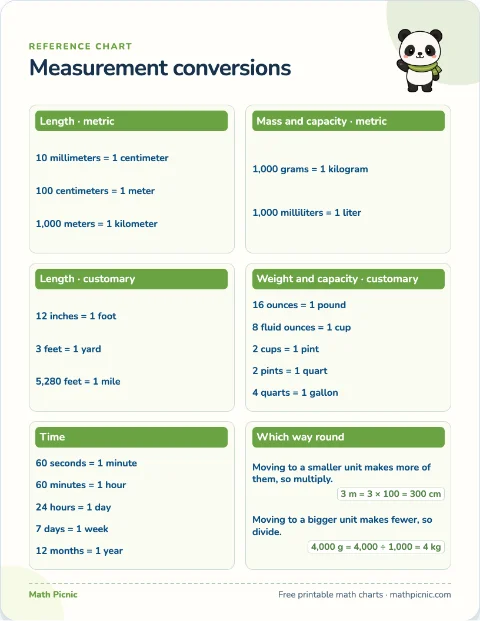 Print Look the conversion up, then decide whether to multiply or divide.
 - Order of operations
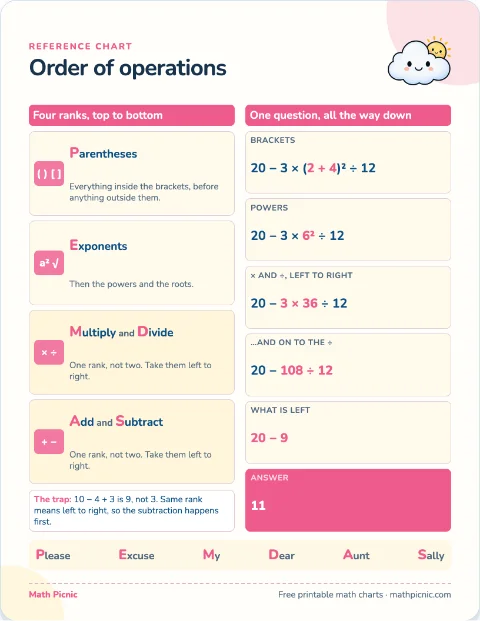 Print Work down the ranks, taking each one left to right before the next.