Roman numeralsRoman → number
Name: Date:
Write each Roman numeral as a number.
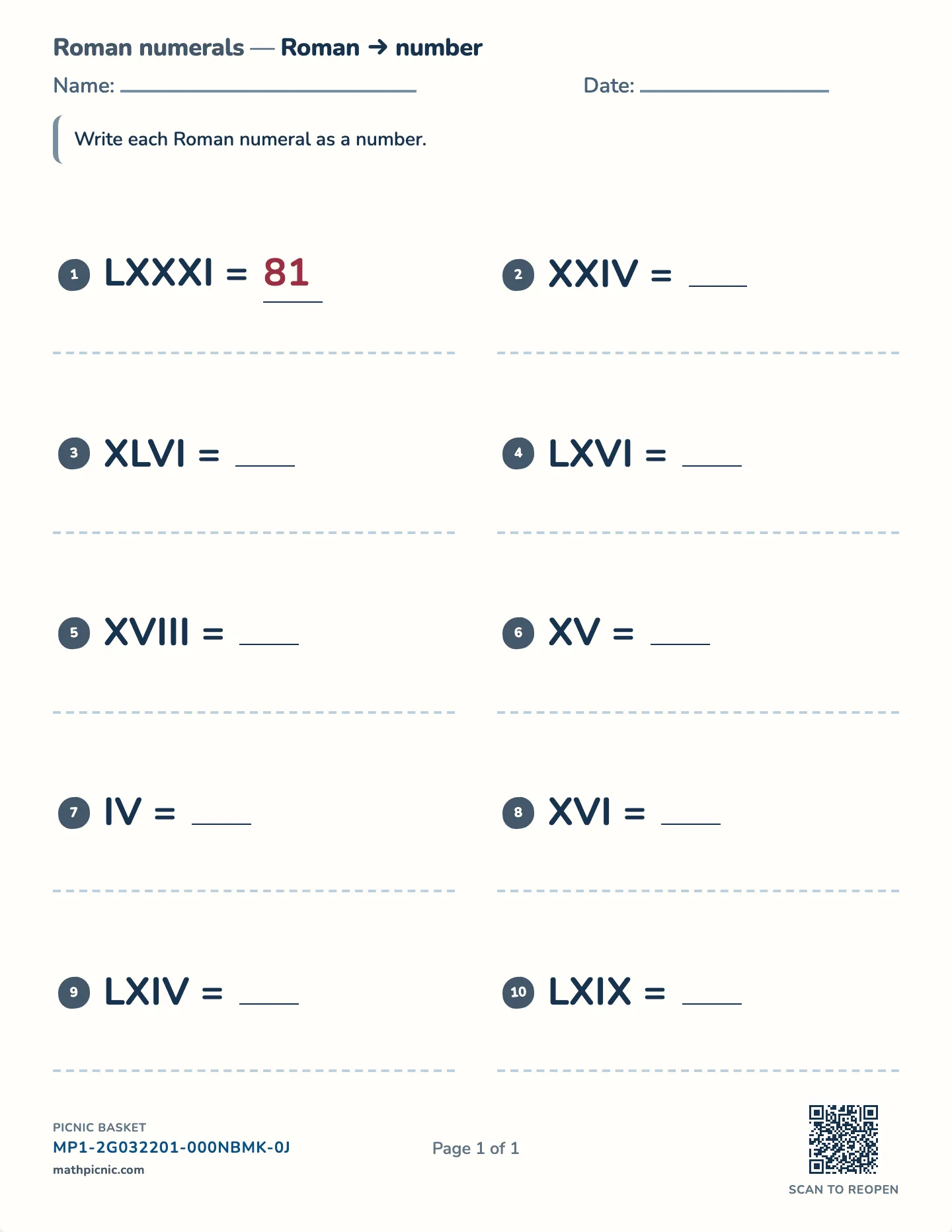
1LXXXI =
2XXIV =
3XLVI =
4LXVI =
5XVIII =
6XV =
7IV =
8XVI =
9LXIV =
10LXIX =

Roman numerals are the numbers on clock faces, book chapters and old building dates, and reading them is taking a string of letters apart. These free printable worksheets go one direction — Roman numeral to ordinary number — from I to C.
If they get stuck
The answer key prints on a separate page.
Reading a numeral is chunking it by two rules. Letters that run large to small add up, so LXVI is 50 + 10 + 5 + 1 = 66; a smaller letter before a larger one subtracts, so IX is one less than ten, and XL is ten less than fifty. Spotting the subtractive pairs first, then adding the rest, is the order that keeps a numeral from being read straight across as pure addition.
The range stops at 100, so the five letters I, V, X, L and C carry everything and no numeral gets long enough to lose track of. That ceiling is deliberate — short numerals can be reasoned through, and reasoning is what turns recognition into fluency rather than a memorized list of a few familiar ones.
One question from a sheet like this one, worked a step at a time — with a sentence saying what just happened and why.
Reading Roman numerals, step by step