
Percent
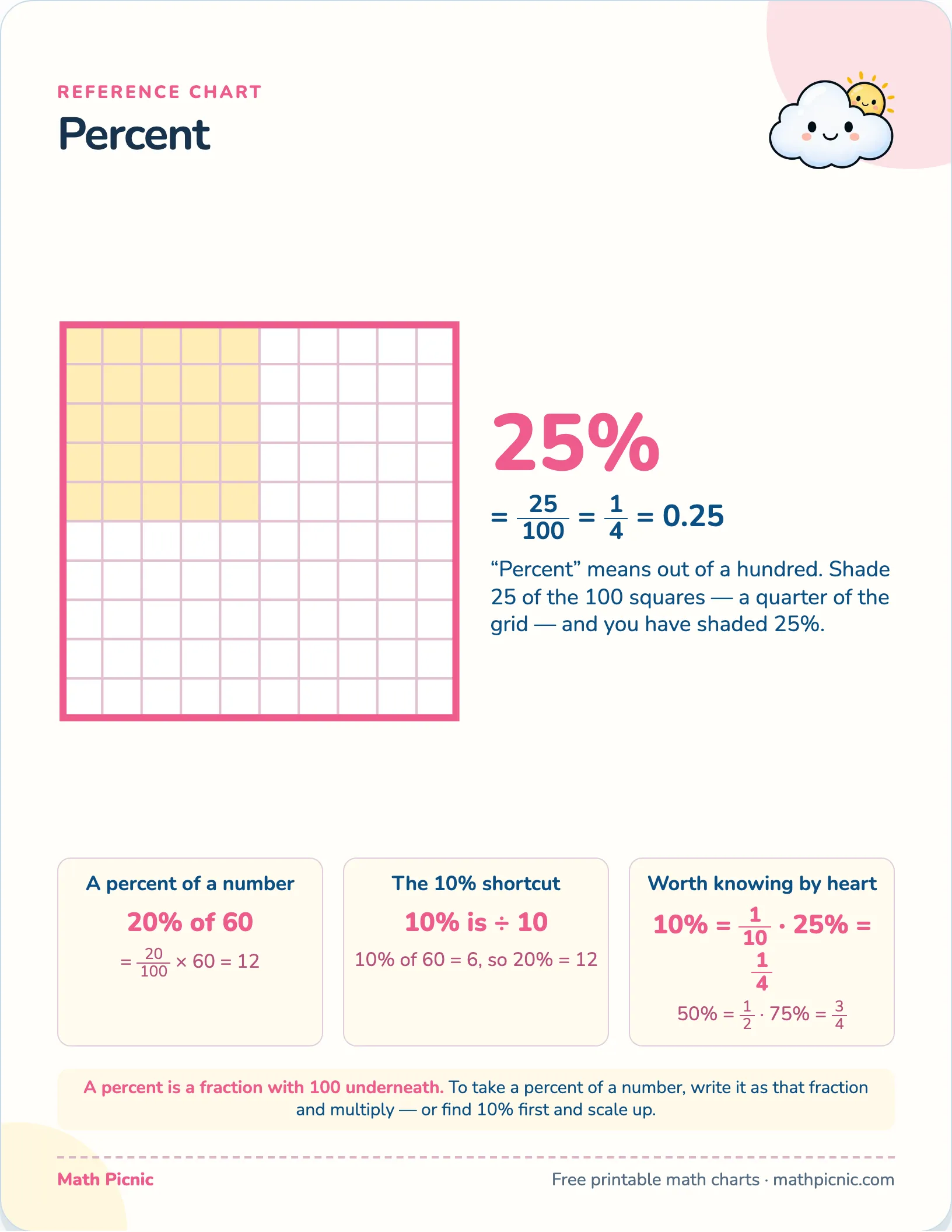
Percent means one thing — out of a hundred — and a ten-by-ten grid is the fastest way to see it. Shade a quarter of the hundred squares and you have shaded 25 of them: 25%, which is 25/100, which is 1/4.
Reference chart
Percent

25%
= 25100 = 14 = 0.25
“Percent” means out of a hundred. Shade 25 of the 100 squares — a quarter of the grid — and you have shaded 25%.
A percent of a number
20% of 60
= 20100 × 60 = 12
The 10% shortcut
10% is ÷ 10
10% of 60 = 6, so 20% = 12
Worth knowing by heart
10% = 110 · 25% = 14
50% = 12 · 75% = 34
A percent is a fraction with 100 underneath. To take a percent of a number, write it as that fraction and multiply — or find 10% first and scale up.
What's on this chart
The word does the teaching once a child reads it literally: percent, per hundred. So the grid has exactly a hundred squares, and shading 25 of them is 25% by definition — there is nothing to compute, only to count. Shading the top-left quarter makes a second fact visible at the same time: those 25 squares are a quarter of the whole grid, so 25% and 1/4 are the same amount seen two ways.
Why this chart helps
Taking a percent OF a number is the step children lose, and it comes straight from the grid. If 25% is 25/100, then 25% of a number is 25/100 of it — write the fraction and multiply. The shortcut worth building the habit on is ten: 10% is one tenth, so divide by ten, and every other step scales from there. 20% of 60 is two of those tenths — 6 and 6 — which is 12.
More printable charts
- Counting to 10
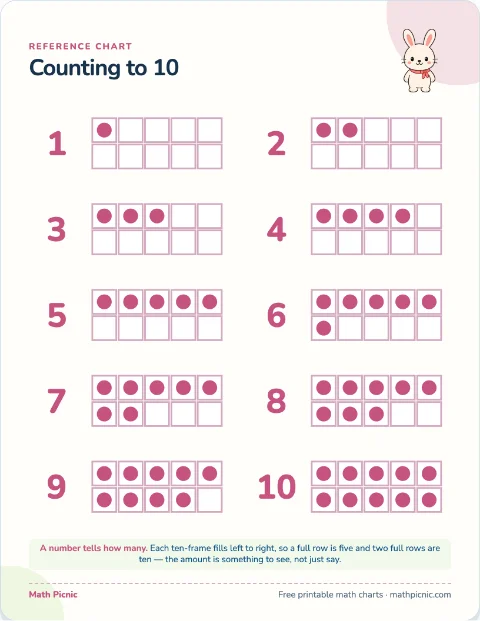 Print Count the dots in each ten-frame and read the number beside it.
 - Number bonds to 10
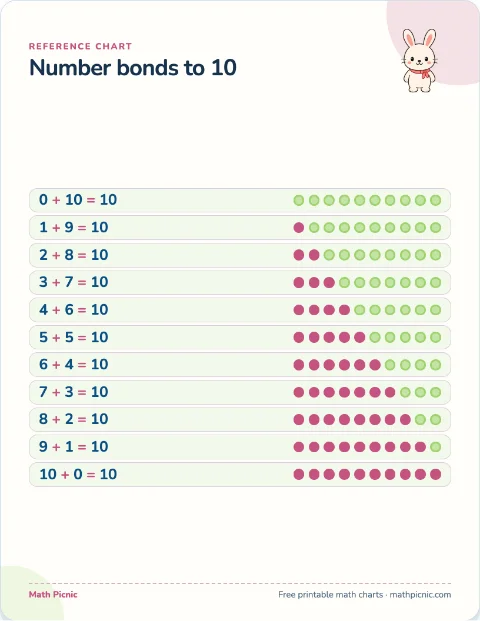 Print Read each row of counters and say the two numbers that make ten.
 - Comparing numbers
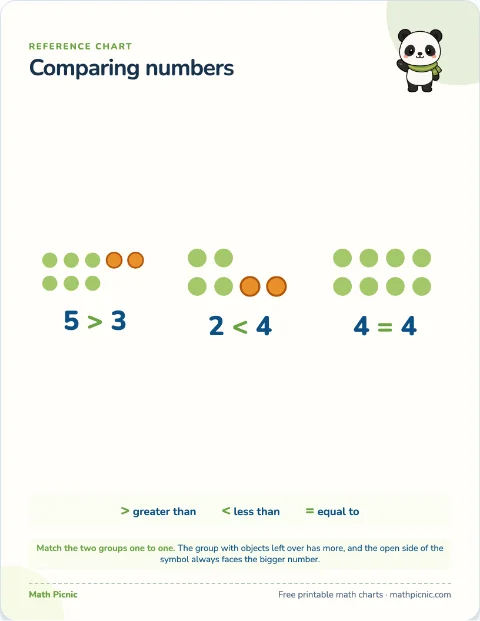 Print Line the two groups up one to one; the group with a leftover has more.
 - Odd and even
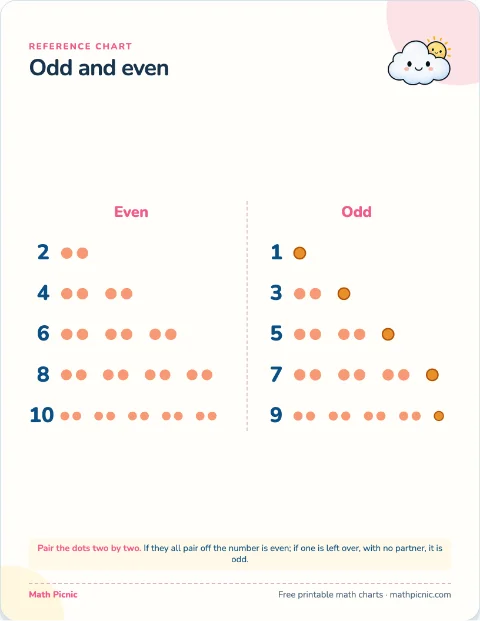 Print Pair the dots two by two; all paired is even, one left over is odd.
 - Number line 0–20
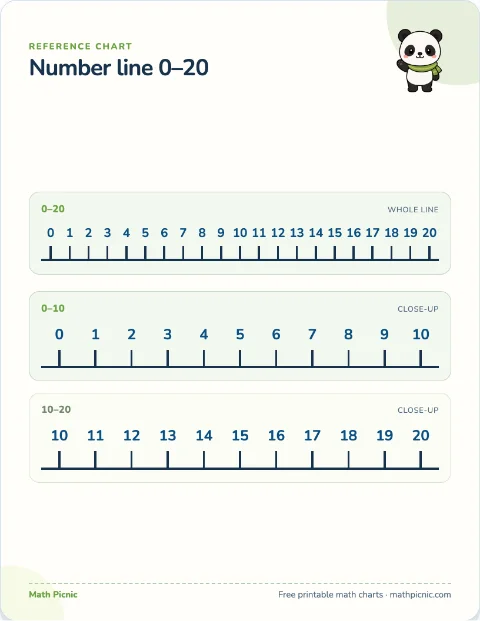 Print Count on or back by hopping along the line one number at a time.
 - Blank number line 0–20
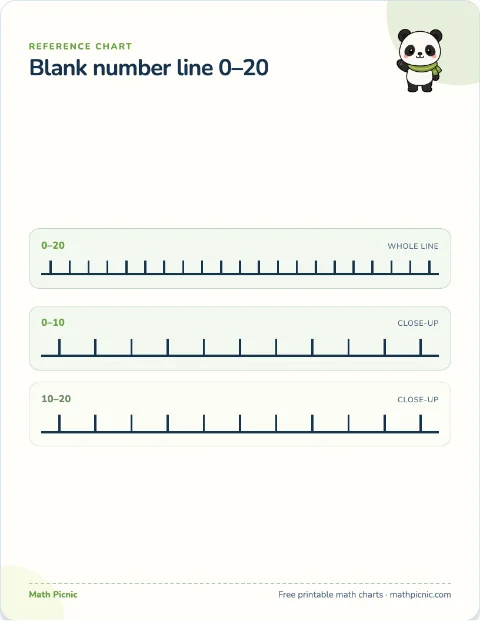 Print Label the ticks, mark a number, or draw equal jumps for an operation.
 - Number bonds to 20
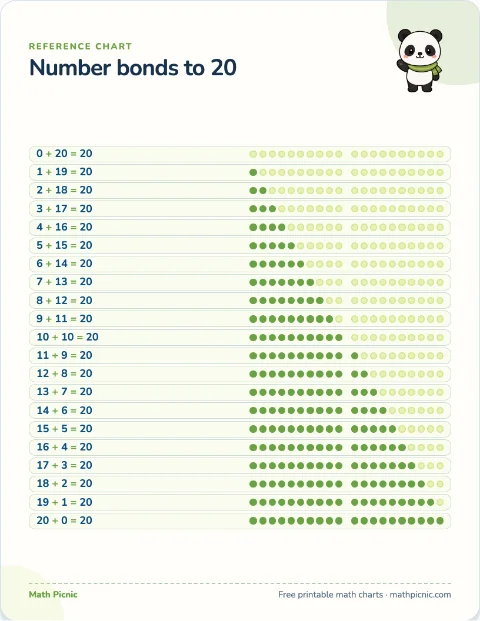 Print Count the two colors in a row and say the pair that makes twenty.
 - Telling the time
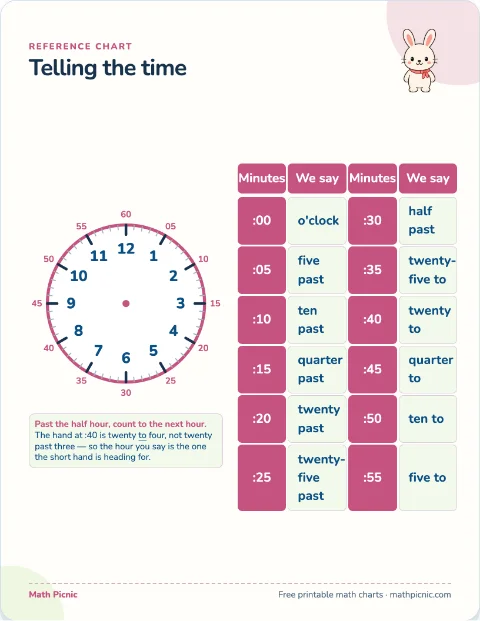 Print Read the hour inside the dial and the minutes printed outside it.