
Ratio and proportion
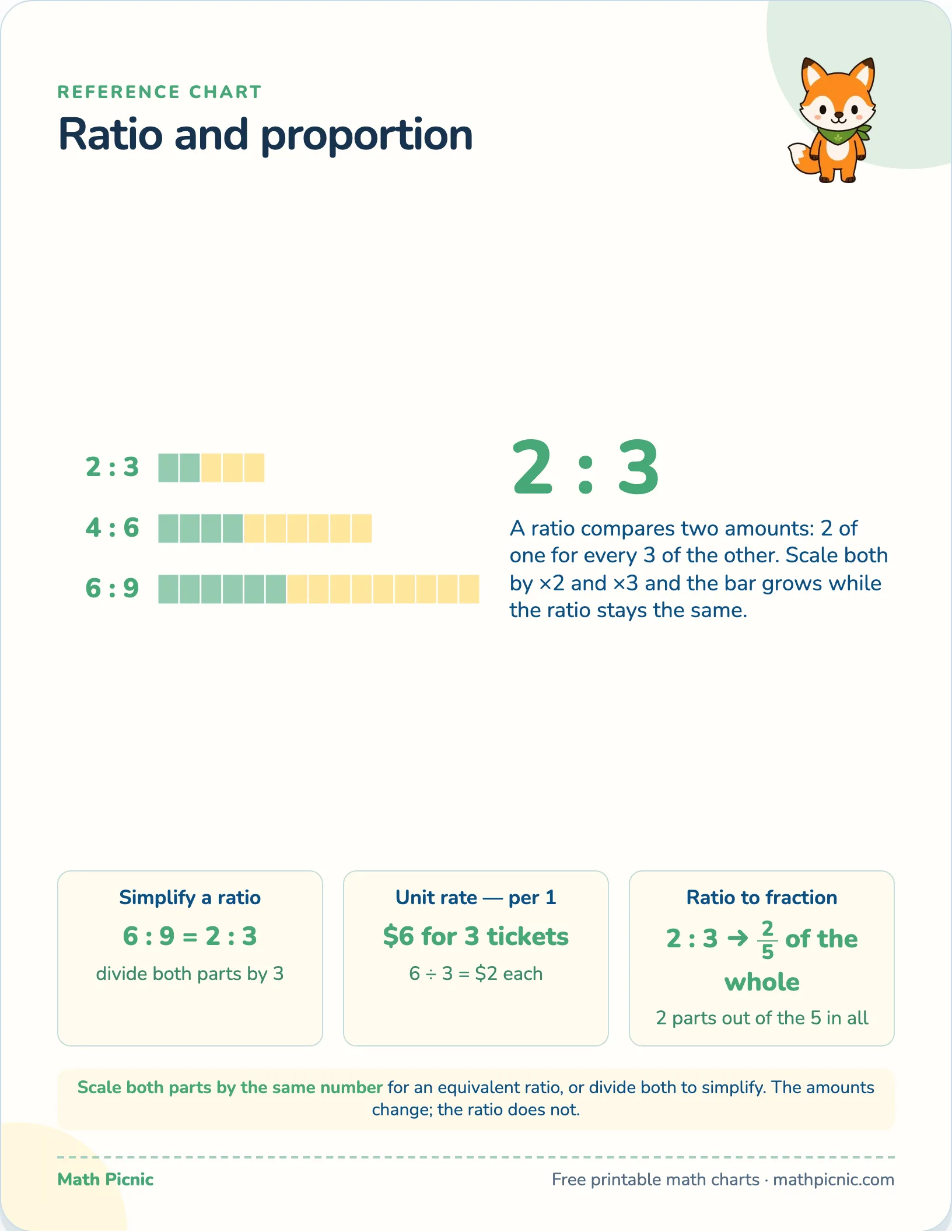
A ratio compares two amounts, and a bar of tiles shows it before any notation does: two tiles of one color for every three of another is 2 to 3. Scale the whole bar up and the ratio stays the same — that is what an equivalent ratio is.
Reference chart
Ratio and proportion

2 : 3
A ratio compares two amounts: 2 of one for every 3 of the other. Scale both by ×2 and ×3 and the bar grows while the ratio stays the same.
Simplify a ratio
6 : 9 = 2 : 3
divide both parts by 3
Unit rate — per 1
$6 for 3 tickets
6 ÷ 3 = $2 each
Ratio to fraction
2 : 3 → 25 of the whole
2 parts out of the 5 in all
Scale both parts by the same number for an equivalent ratio, or divide both to simplify. The amounts change; the ratio does not.
What's on this chart
The notation 2 : 3 is short for a picture — for every 2 of one thing there are 3 of another. Drawing it as a bar of five tiles, two of one color and three of another, makes the comparison something a child can see and count rather than a pair of numbers with a colon between them. Five tiles in all, split two and three: that is the ratio.
Why this chart helps
An equivalent ratio is the same bar built at a bigger scale. Double every tile and 2 : 3 becomes 4 : 6; triple it and it becomes 6 : 9 — the same comparison, more tiles. That single move is behind almost every ratio question: multiply both parts by the same number to scale up, or divide both by the same number to simplify back down. Because both parts change together, the ratio itself does not.
More printable charts
- Counting to 10
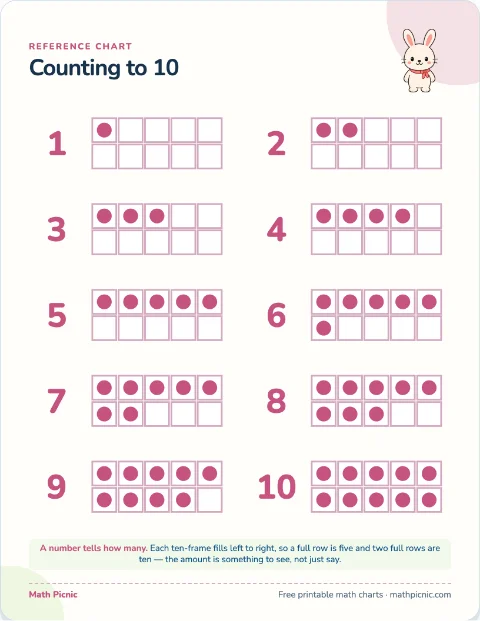 Print Count the dots in each ten-frame and read the number beside it.
 - Number bonds to 10
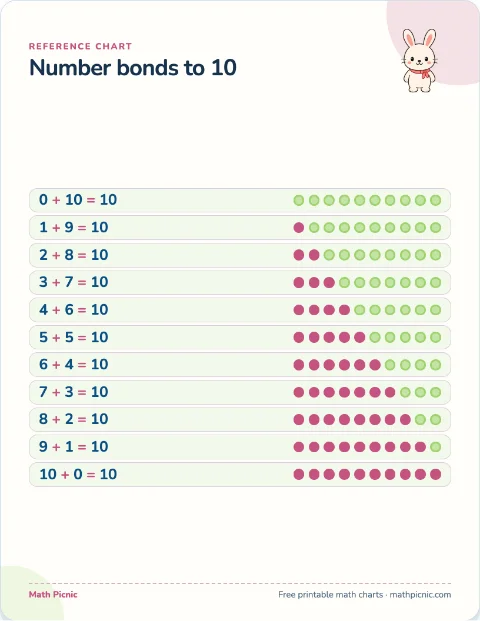 Print Read each row of counters and say the two numbers that make ten.
 - Comparing numbers
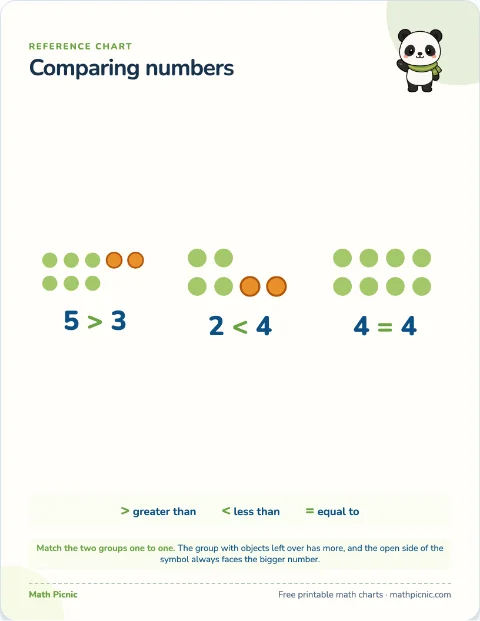 Print Line the two groups up one to one; the group with a leftover has more.
 - Odd and even
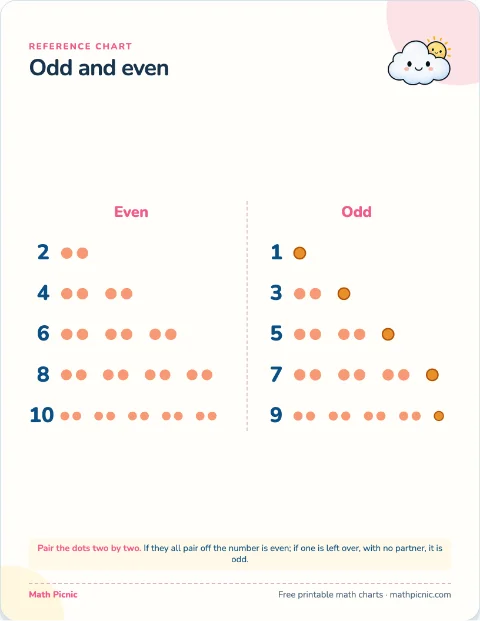 Print Pair the dots two by two; all paired is even, one left over is odd.
 - Number line 0–20
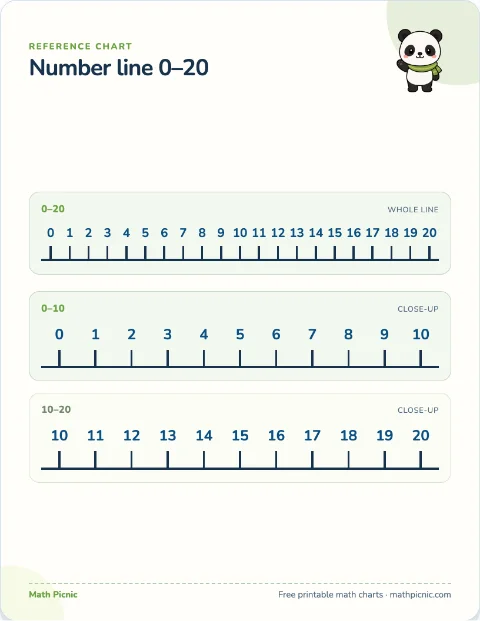 Print Count on or back by hopping along the line one number at a time.
 - Blank number line 0–20
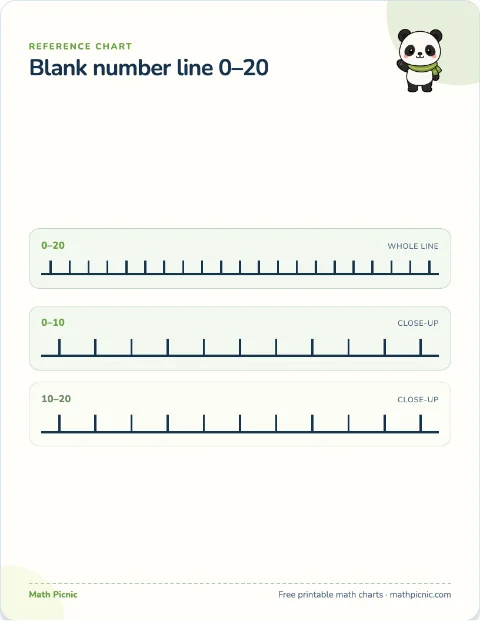 Print Label the ticks, mark a number, or draw equal jumps for an operation.
 - Number bonds to 20
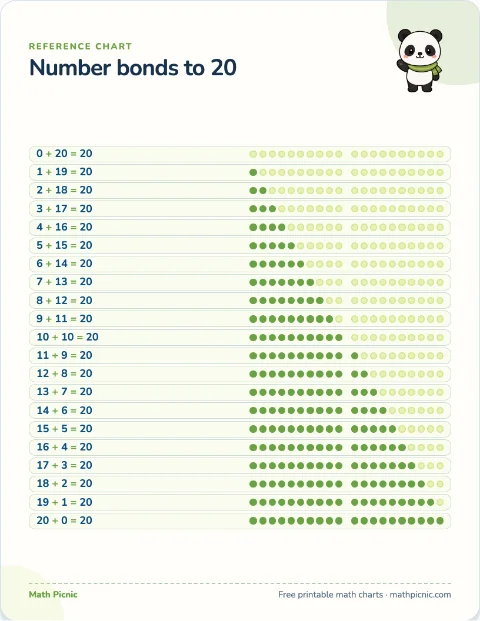 Print Count the two colors in a row and say the pair that makes twenty.
 - Telling the time
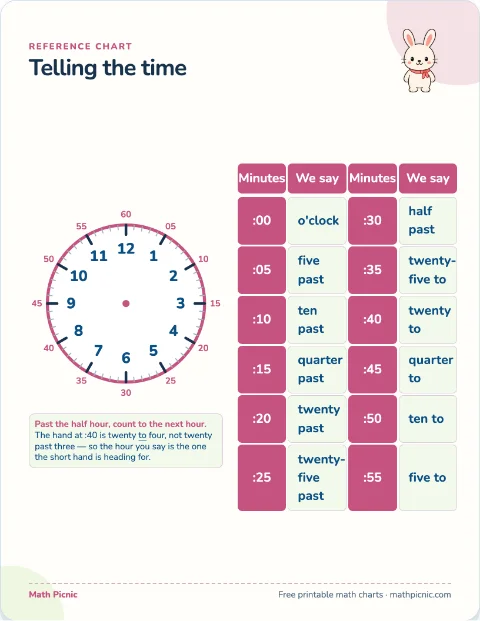 Print Read the hour inside the dial and the minutes printed outside it.