
Congruence & similarity
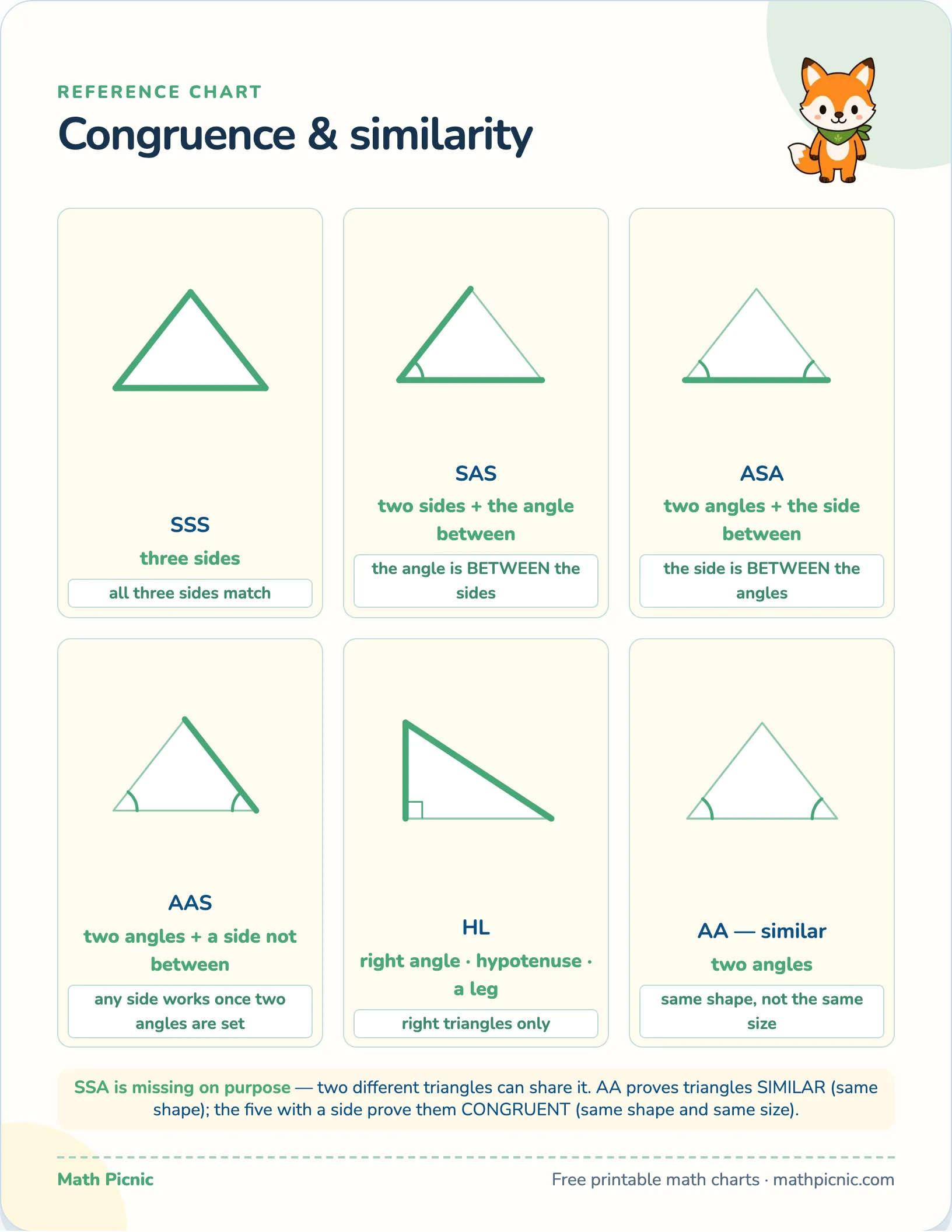
The sets of parts that pin a triangle down. Each criterion is drawn with its given parts marked — highlighted sides, arced angles — so the question “what do I need to know?” is answered by a picture.
Reference chart
Congruence & similarity

SSS
three sides
all three sides match
SAS
two sides + the angle between
the angle is BETWEEN the sides
ASA
two angles + the side between
the side is BETWEEN the angles
AAS
two angles + a side not between
any side works once two angles are set
HL
right angle · hypotenuse · a leg
right triangles only
AA — similar
two angles
same shape, not the same size
SSA is missing on purpose — two different triangles can share it. AA proves triangles SIMILAR (same shape); the five with a side prove them CONGRUENT (same shape and same size).
What's on this chart
Two triangles are congruent when they have exactly the same size and shape, and you do not need all six measurements to be sure of it — five specific combinations are enough. SSS is three sides; SAS is two sides and the angle between them; ASA is two angles and the side between them; AAS is two angles and a side that is not between them; and HL is the right-triangle special case: a right angle, the hypotenuse, and one leg. This chart marks the given parts on each triangle so the pattern behind the letters is visible.
Why this chart helps
The order of the letters matters because it says where the angle or side sits. SAS works because the angle is trapped between the two sides, which locks the shape; the same three measurements as SSA — two sides and an angle not between them — do not, and two different triangles can share them. That is why SSA is left off the chart on purpose.
More printable charts
- Naming 2D shapes
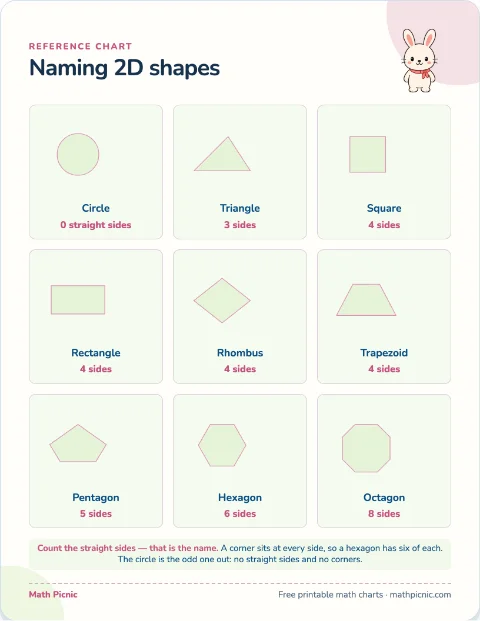 Print Count the straight sides on a shape, then read its name below it.
 - Quadrilateral family
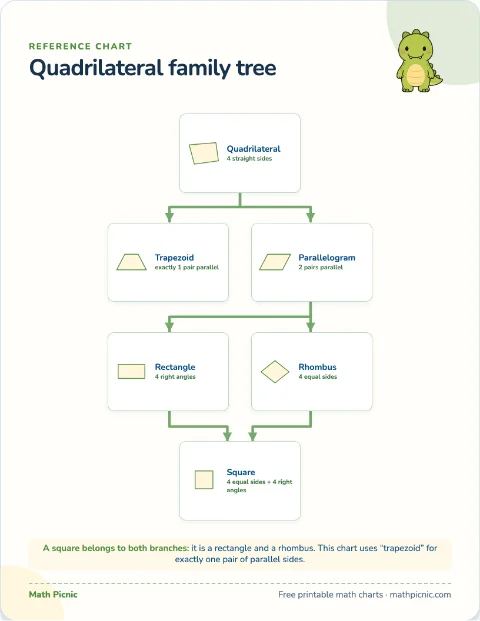 Print Follow the branches to see which names a shape inherits.
 - Lines of symmetry
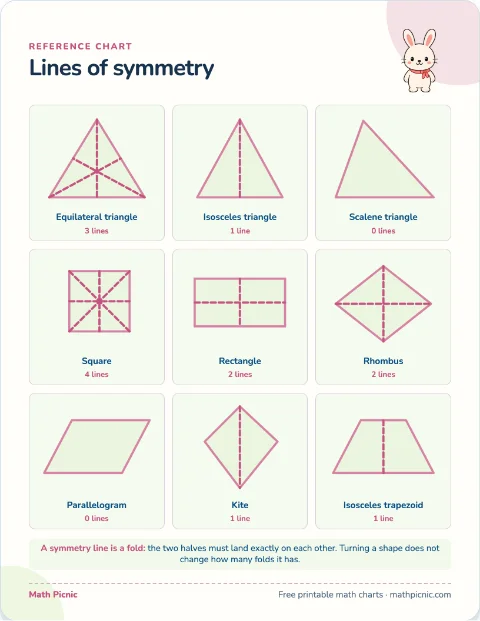 Print Fold each shape in your mind and count the matching halves.
 - Types of angles
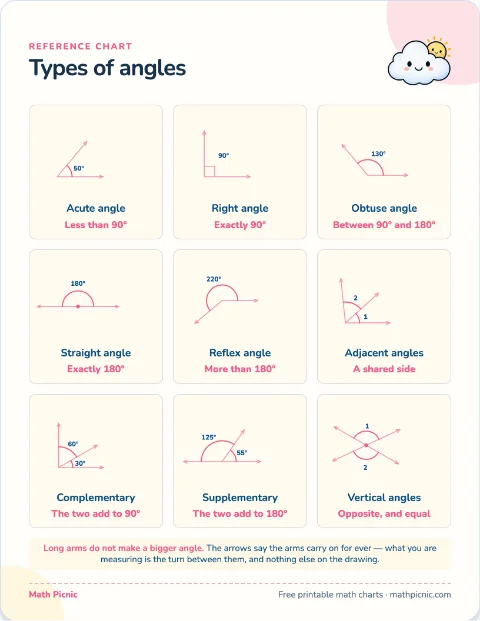 Print Find the picture that matches yours, and the name is under it.
 - Angles in parallel lines
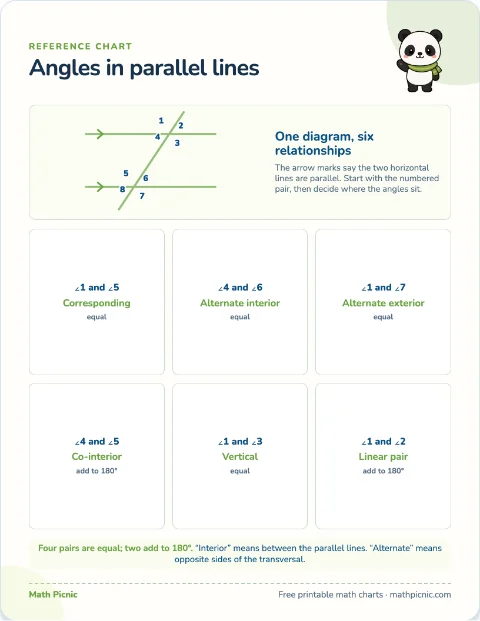 Print Match each numbered pair to its position around the transversal.
 - Perimeter formulas
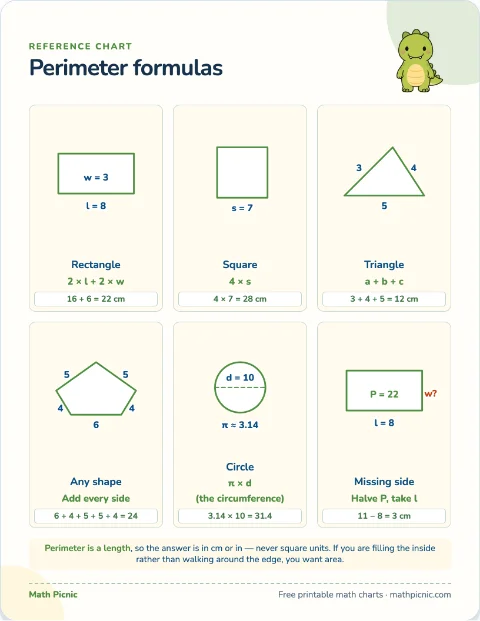 Print Follow the traced edge on the figure, then read the formula under it.
 - Area formulas
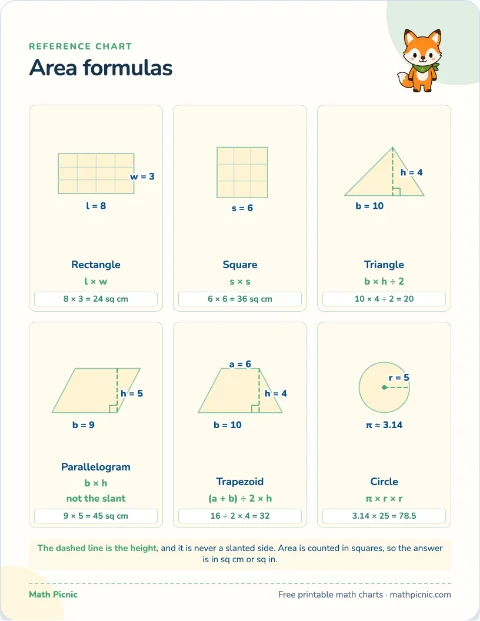 Print Match your shape to a figure and use the letters drawn on it.
 - Volume formulas
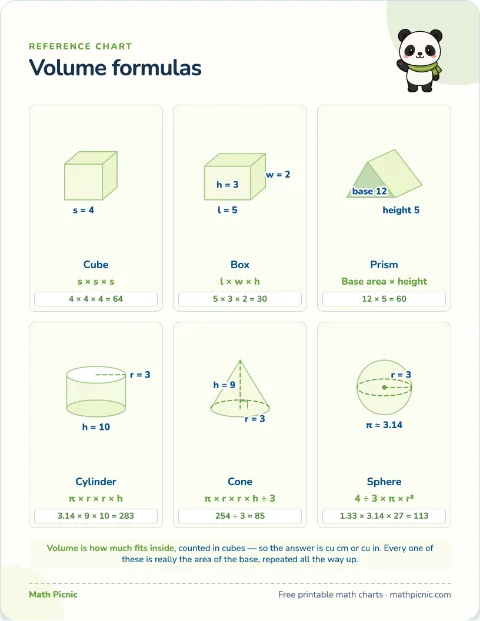 Print Find your solid, then multiply the base area by how tall it stands.