
Fraction wall
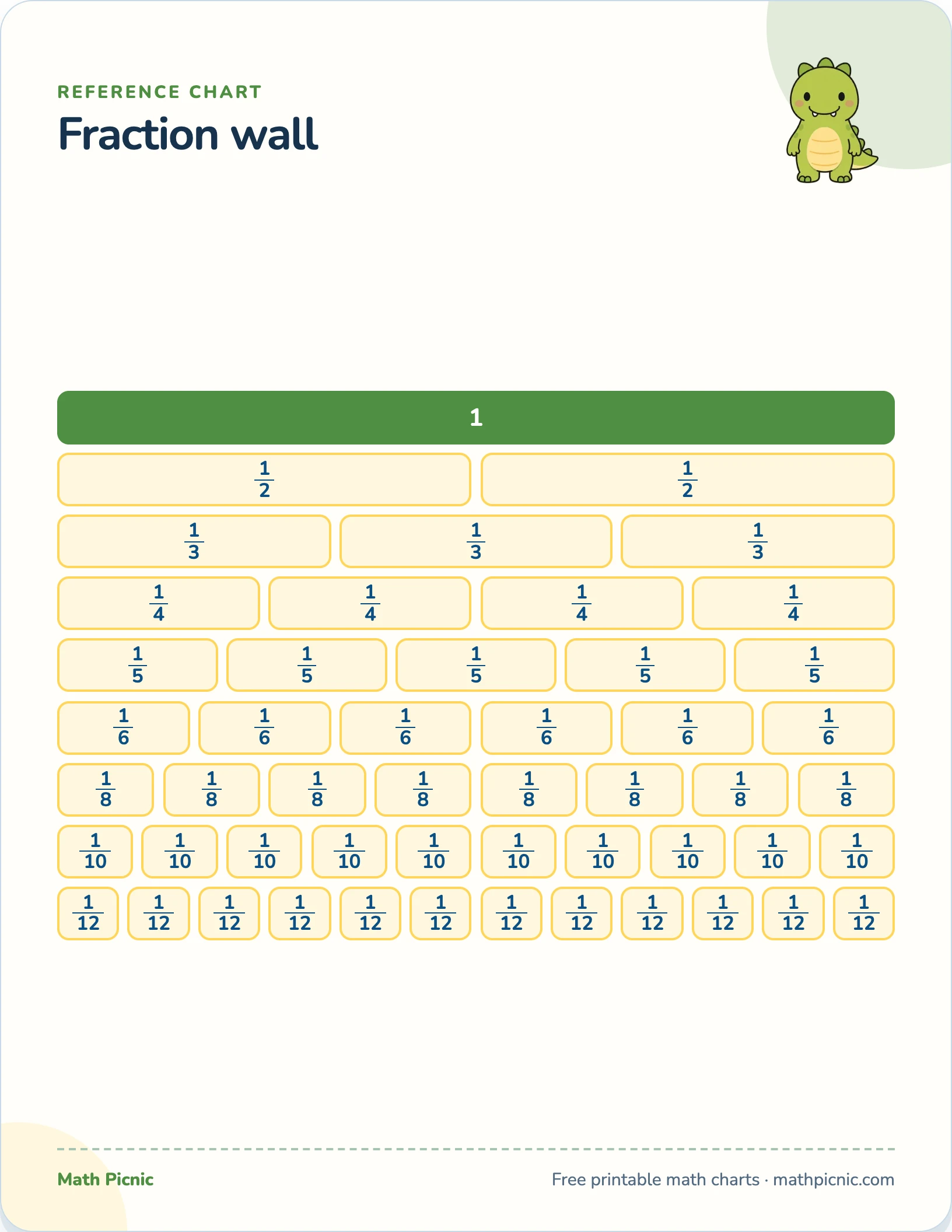
One whole, then the same width cut into halves, thirds, quarters, and on down to twelfths. Because every row is the same length, a child can see which fractions are equal instead of being told.
Reference chart
Fraction wall
What's on this chart
A fraction wall turns the hardest early idea — that 1/2 and 2/4 and 3/6 are the same amount — into something you look at rather than memorize. Line a finger down the wall and the cells that end at the same place are equal, so equivalence and comparison stop being rules and become a picture.
Why this chart helps
The rows go to twelfths because that covers the denominators most fraction work uses, and the widths make the surprises visible: a child who expects 1/8 to be big because eight is big can see it is one of the smallest pieces on the page. Read across a row to count how many parts make the whole; read down a column to find equal fractions.
More printable charts
- Counting to 10
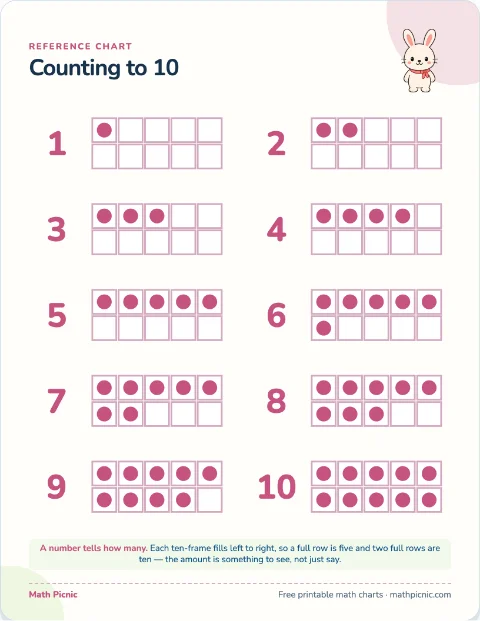 Print Count the dots in each ten-frame and read the number beside it.
 - Number bonds to 10
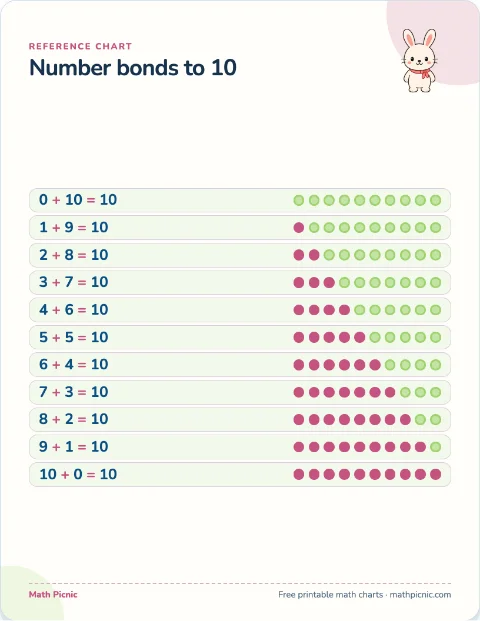 Print Read each row of counters and say the two numbers that make ten.
 - Comparing numbers
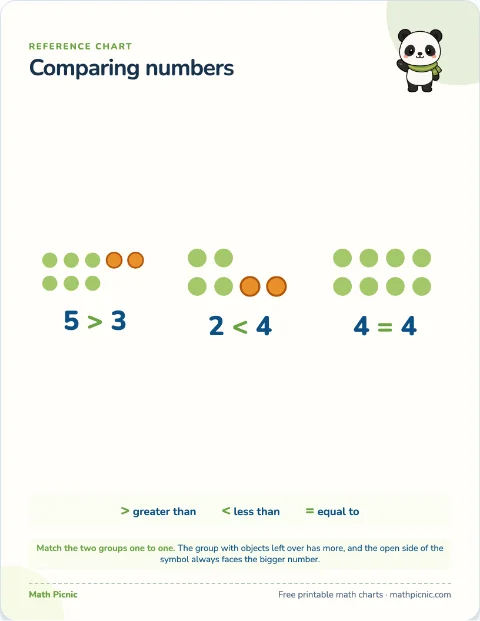 Print Line the two groups up one to one; the group with a leftover has more.
 - Odd and even
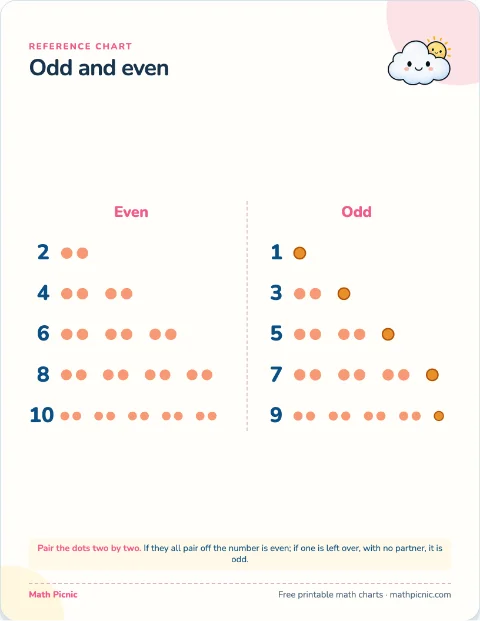 Print Pair the dots two by two; all paired is even, one left over is odd.
 - Number line 0–20
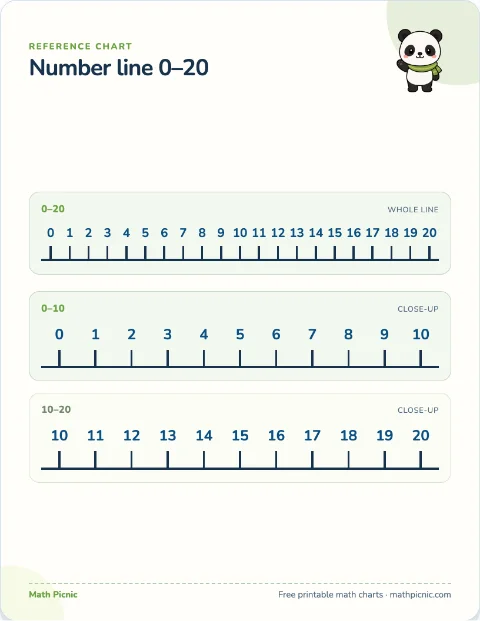 Print Count on or back by hopping along the line one number at a time.
 - Blank number line 0–20
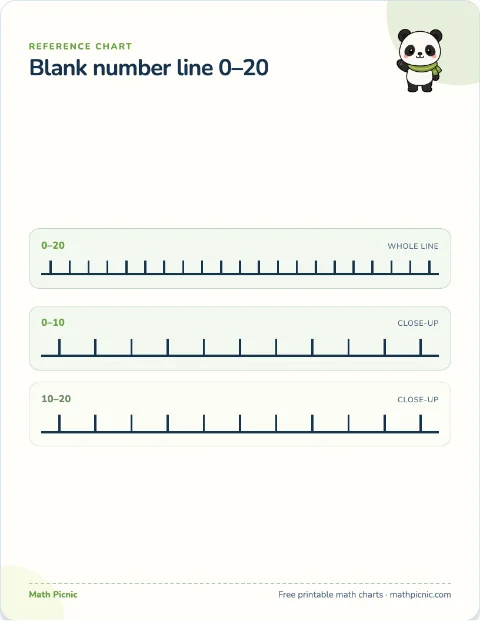 Print Label the ticks, mark a number, or draw equal jumps for an operation.
 - Number bonds to 20
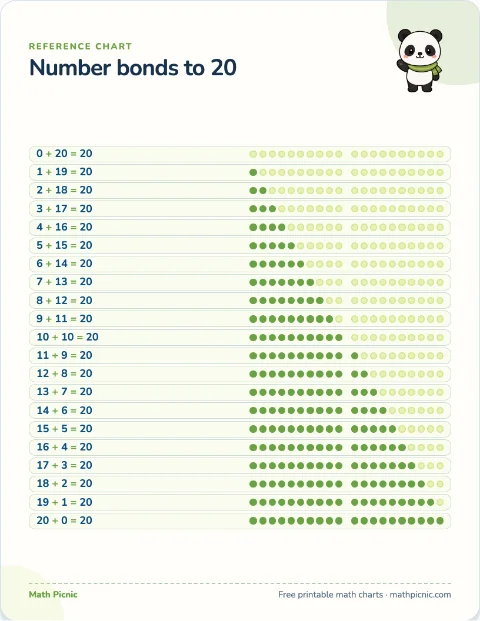 Print Count the two colors in a row and say the pair that makes twenty.
 - Telling the time
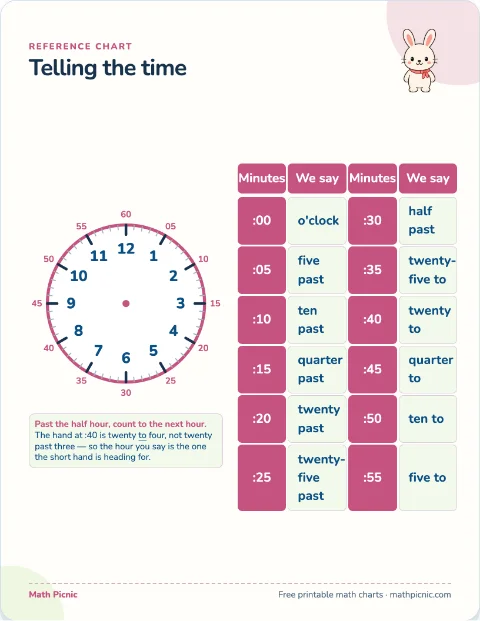 Print Read the hour inside the dial and the minutes printed outside it.