
Pascal's triangle · 10 rows
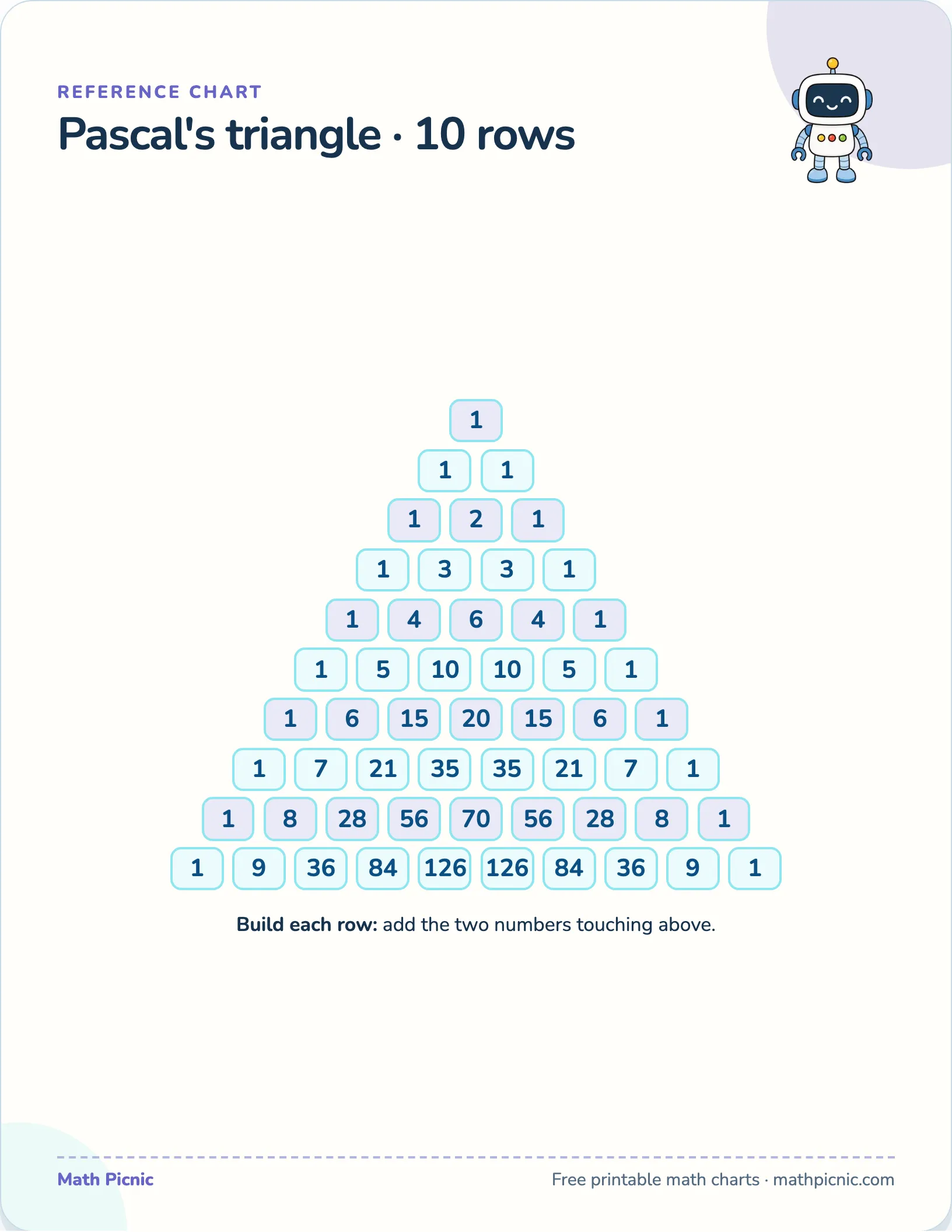
Start with 1. Every inside number is the sum of the two touching it above — one small rule that grows into symmetry, powers of two, combinations, and number patterns.
Reference chart
Pascal's triangle · 10 rows

Build each row: add the two numbers touching above.
What's on this chart
Pascal's triangle is useful because it can be rebuilt instead of memorized. The ones form the two outside edges; between them, each number comes from adding the pair directly above. If a row is lost, the row before it is enough to make it again.
Why this chart helps
Read across and the triangle is symmetrical. Add a whole row and the totals double — 1, 2, 4, 8, 16 — the powers of two hiding in plain sight. Follow the shallow diagonals and the counting numbers appear, followed by triangular numbers. Those patterns make the page worth revisiting at several grade levels.
More printable charts
- Counting to 10
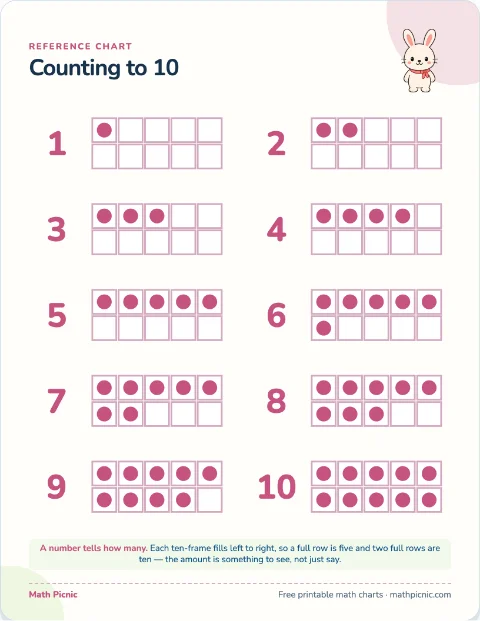 Print Count the dots in each ten-frame and read the number beside it.
 - Number bonds to 10
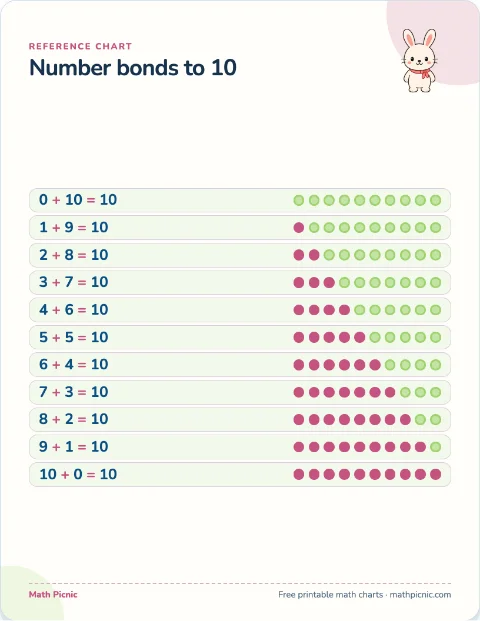 Print Read each row of counters and say the two numbers that make ten.
 - Comparing numbers
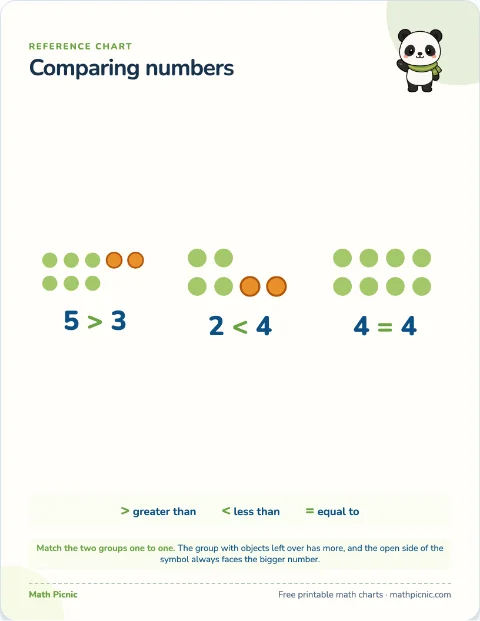 Print Line the two groups up one to one; the group with a leftover has more.
 - Odd and even
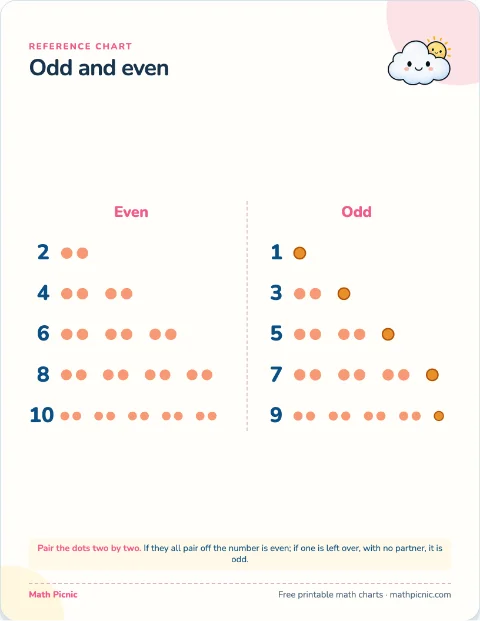 Print Pair the dots two by two; all paired is even, one left over is odd.
 - Number line 0–20
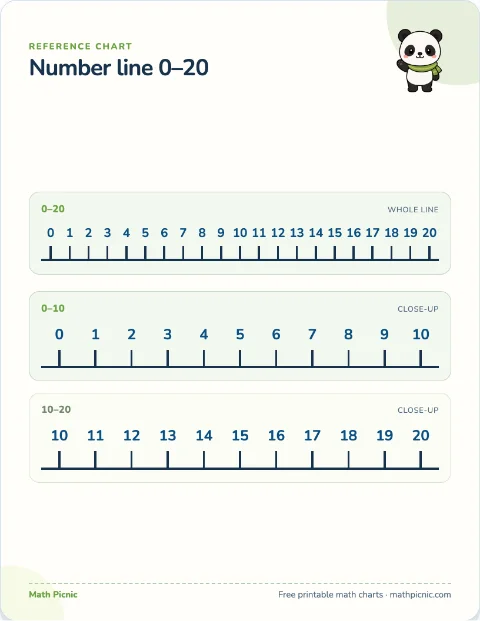 Print Count on or back by hopping along the line one number at a time.
 - Blank number line 0–20
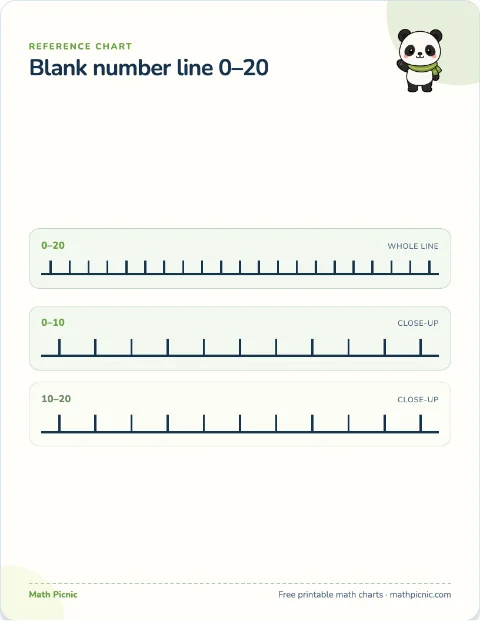 Print Label the ticks, mark a number, or draw equal jumps for an operation.
 - Number bonds to 20
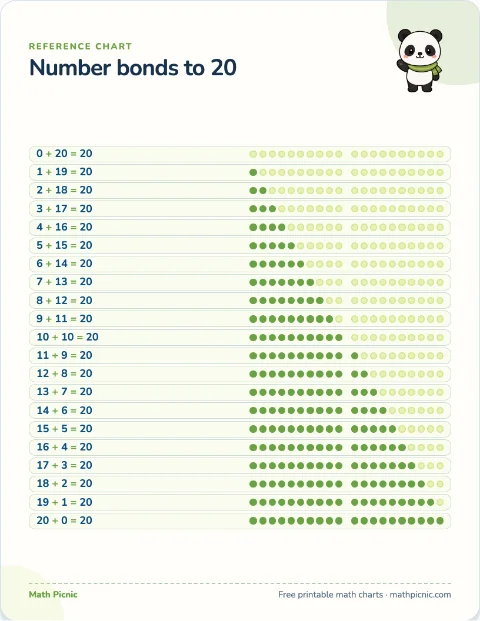 Print Count the two colors in a row and say the pair that makes twenty.
 - Telling the time
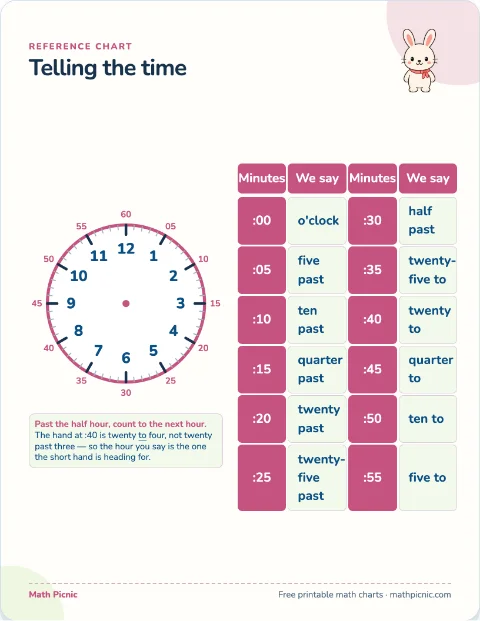 Print Read the hour inside the dial and the minutes printed outside it.