
Probability: add or multiply
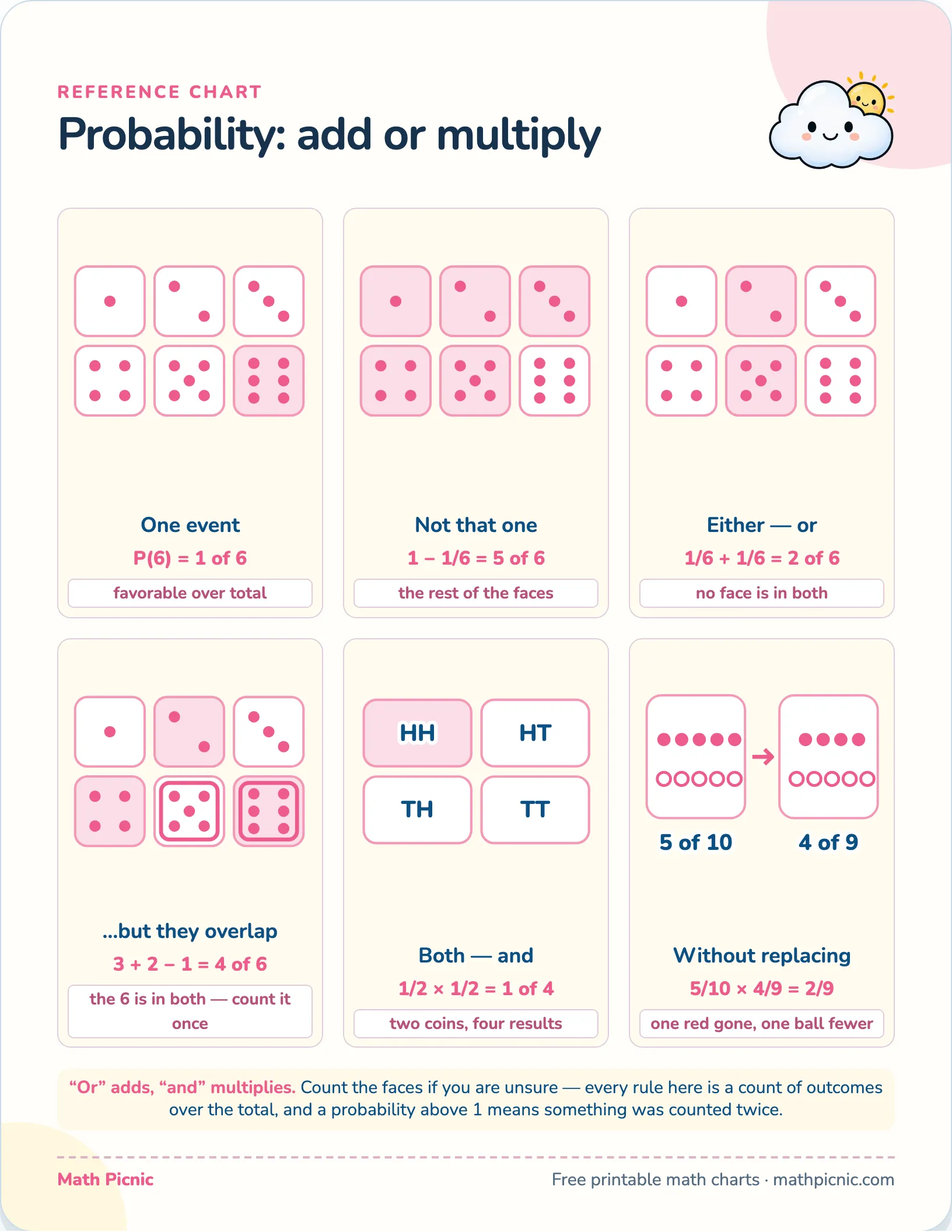
Six pictures instead of six rules — the faces of a die, the four results of two coins, and a bag before and after a ball comes out of it.
Reference chart
Probability: add or multiply

One event
P(6) = 1 of 6
favorable over total
Not that one
1 − 1/6 = 5 of 6
the rest of the faces
Either — or
1/6 + 1/6 = 2 of 6
no face is in both
…but they overlap
3 + 2 − 1 = 4 of 6
the 6 is in both — count it once
Both — and
1/2 × 1/2 = 1 of 4
two coins, four results
Without replacing
5/10 × 4/9 = 2/9
one red gone, one ball fewer
“Or” adds, “and” multiplies. Count the faces if you are unsure — every rule here is a count of outcomes over the total, and a probability above 1 means something was counted twice.
What's on this chart
A child who can say "one in six" still has to decide whether to add or to multiply, and the word that decides it is easy to read straight past. So each card here is titled by the word — "either — or" adds, "both — and" multiplies — and then shows what that means on the outcomes themselves.
Why this chart helps
Overlap is where it first gets subtle, and it is the clearest argument for drawing this rather than writing it. Rolling an even number or a number over 4 covers 2, 4, 6 and 5, 6: on the card the even faces are shaded and the faces over 4 are outlined, so the 6 carries both marks and it is obvious by looking that adding 3/6 and 2/6 counts it twice. Nobody has to be told to subtract the overlap once.
More printable charts
- Rounding rules
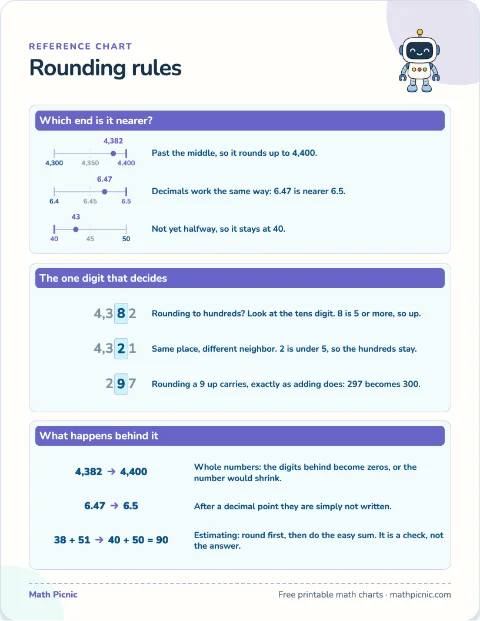 Print Find the place, look at the digit beside it, then decide.
 - Properties of operations
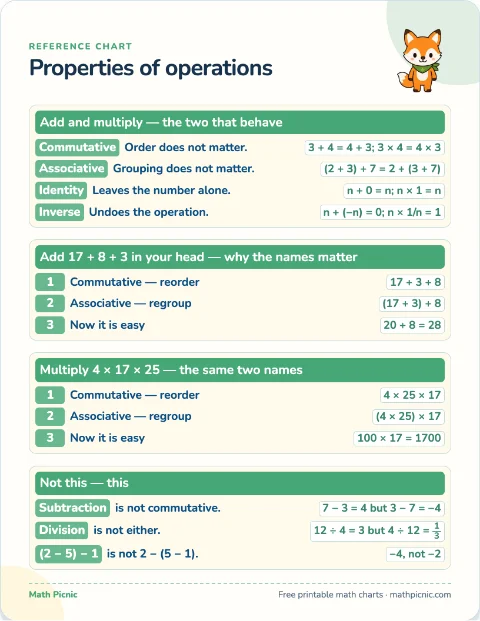 Print Name the property a step used, or find the one that makes a calculation easier.
 - The distributive property
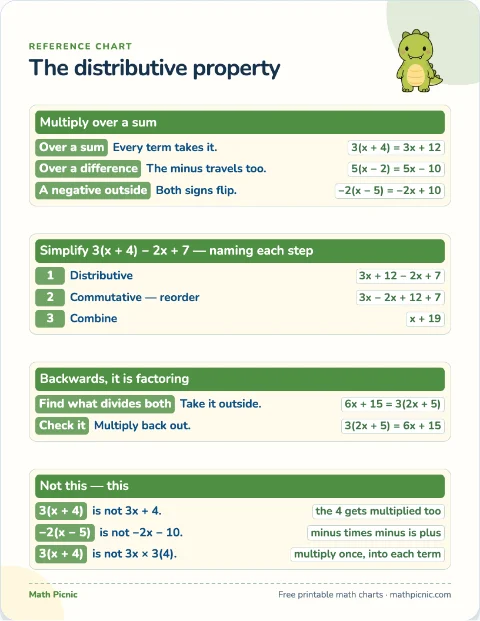 Print Expand a bracket term by term, or read the card backwards to factor.
 - Mental math tricks
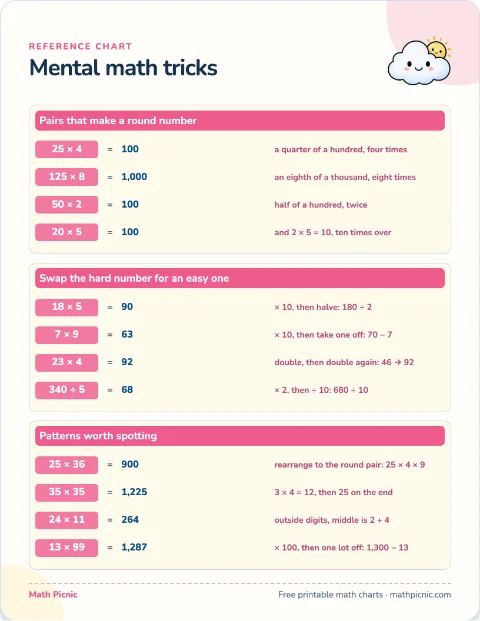 Print Swap the hard number for an easy one before you start calculating.
 - Divisibility rules
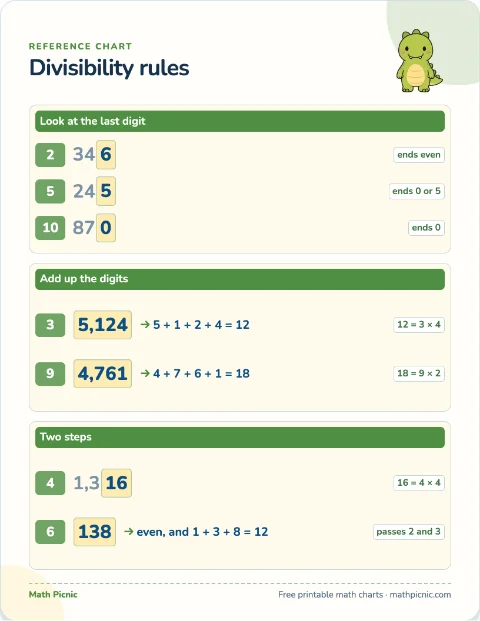 Print Run one quick test in their head instead of starting a division.
 - Fraction rules
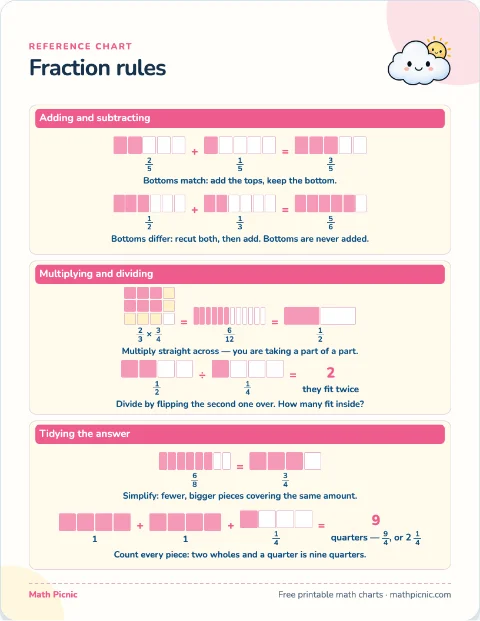 Print Check a fraction answer against the rule before doing the arithmetic.
 - Measurement conversions
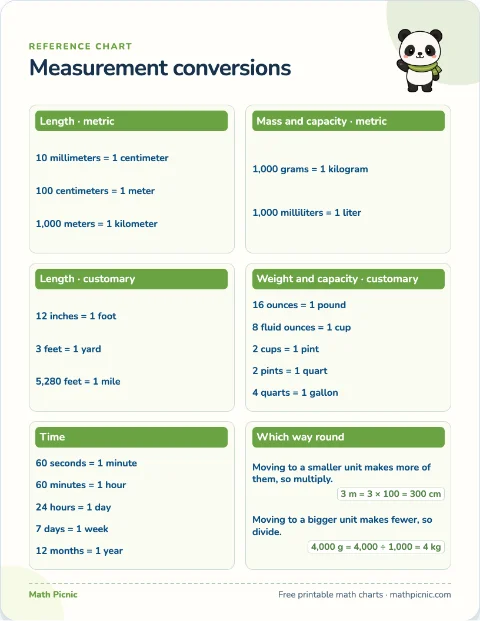 Print Look the conversion up, then decide whether to multiply or divide.
 - Order of operations
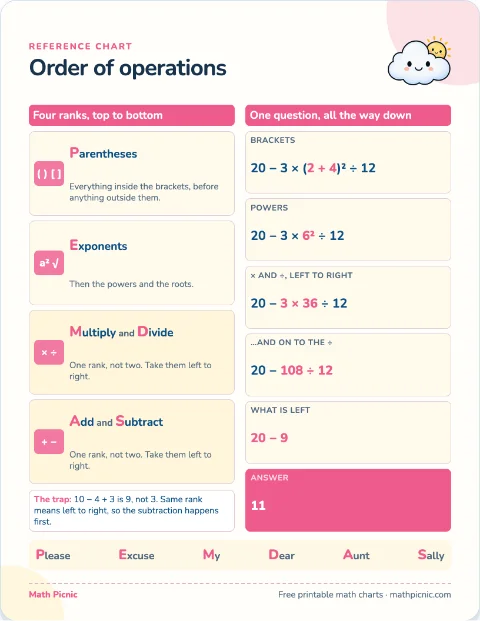 Print Work down the ranks, taking each one left to right before the next.