
Prime numbers to 100
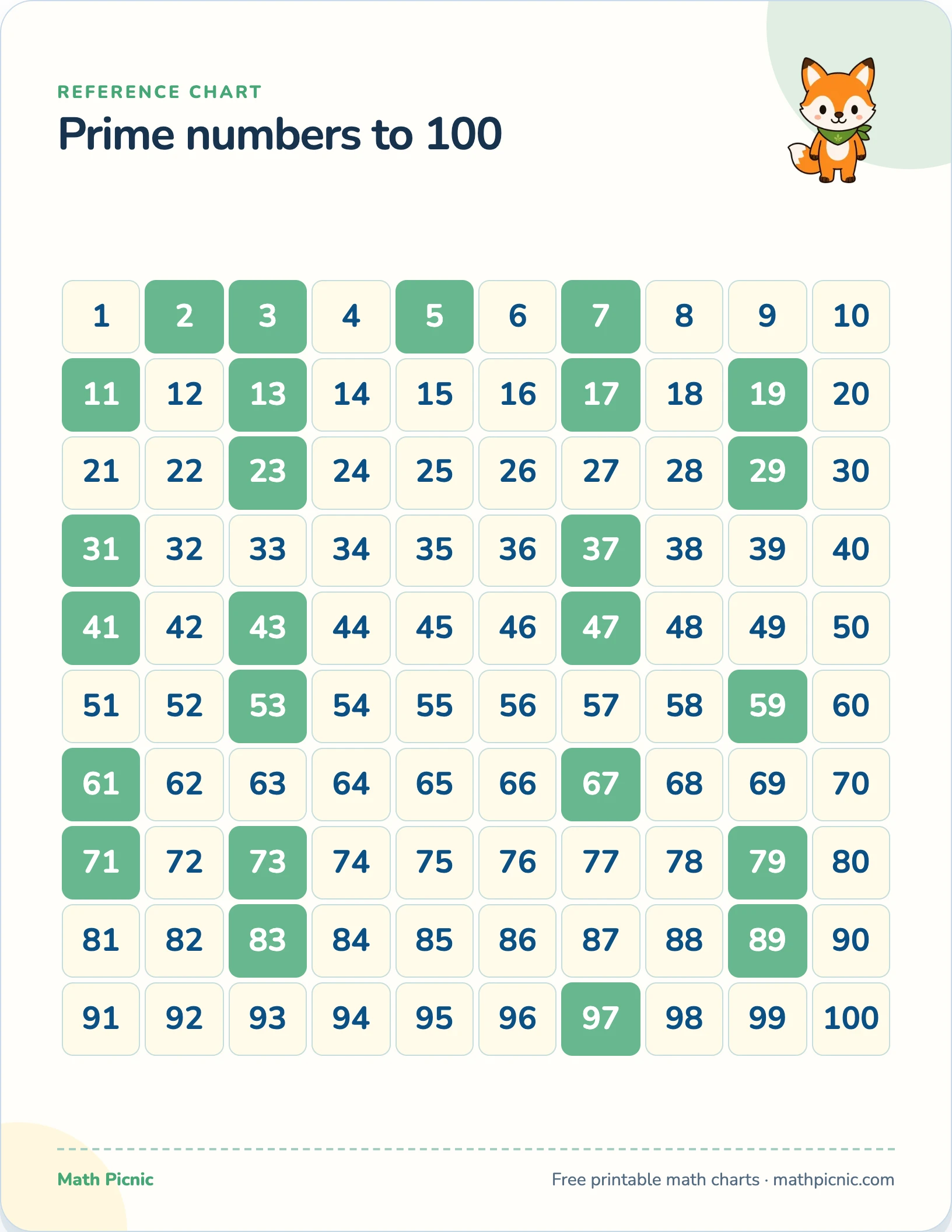
All twenty-five primes below a hundred, marked on a grid of ten. This is the standard classroom range and the one most factoring, GCF, and LCM work lives inside.
Reference chart
Prime numbers to 100

| 1 | 2 | 3 | 4 | 5 | 6 | 7 | 8 | 9 | 10 |
| 11 | 12 | 13 | 14 | 15 | 16 | 17 | 18 | 19 | 20 |
| 21 | 22 | 23 | 24 | 25 | 26 | 27 | 28 | 29 | 30 |
| 31 | 32 | 33 | 34 | 35 | 36 | 37 | 38 | 39 | 40 |
| 41 | 42 | 43 | 44 | 45 | 46 | 47 | 48 | 49 | 50 |
| 51 | 52 | 53 | 54 | 55 | 56 | 57 | 58 | 59 | 60 |
| 61 | 62 | 63 | 64 | 65 | 66 | 67 | 68 | 69 | 70 |
| 71 | 72 | 73 | 74 | 75 | 76 | 77 | 78 | 79 | 80 |
| 81 | 82 | 83 | 84 | 85 | 86 | 87 | 88 | 89 | 90 |
| 91 | 92 | 93 | 94 | 95 | 96 | 97 | 98 | 99 | 100 |
What's on this chart
Primes are the building blocks of every other number: any whole number is a product of primes, one way only. A child who can find the primes to 100 quickly can break most numbers into their factors, which is exactly what the greatest common factor, the least common multiple, and simplifying fractions all lean on.
Why this chart helps
The grid shows why the primes thin out as they climb. After 2 no even number is prime; after 5 nothing ending in 5 is; so the marked squares settle into a few busy columns and long gaps a child starts to predict. Two is the only even prime — every other even number already has two as a factor.
More printable charts
- Hundreds chart
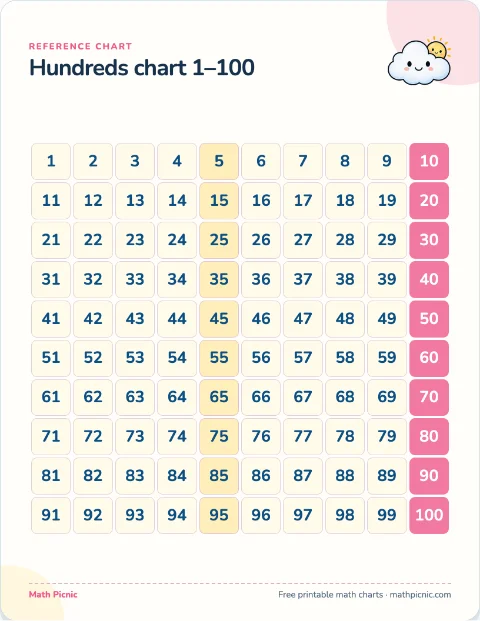 Print Count, skip count, or add ten by moving one square straight down.
 - Addition table
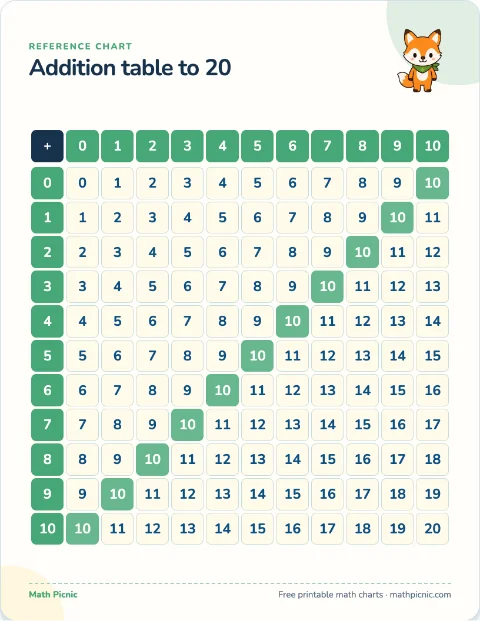 Print Follow a row and a column to the square where the two numbers meet.
 - Subtraction table
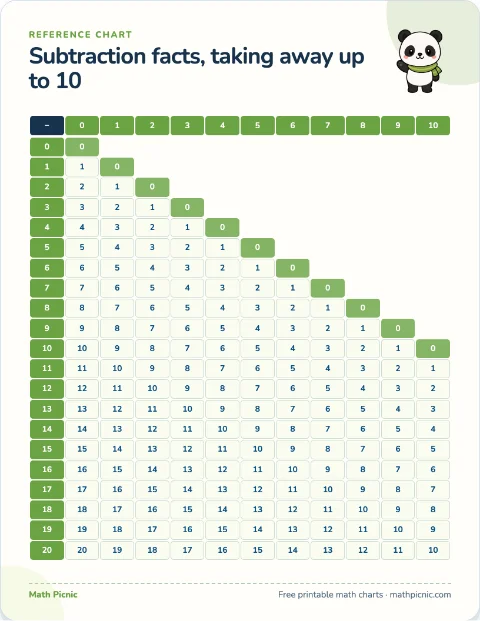 Print Start on the number being taken from, then read across to what is taken away.
 - Subtraction table to 20
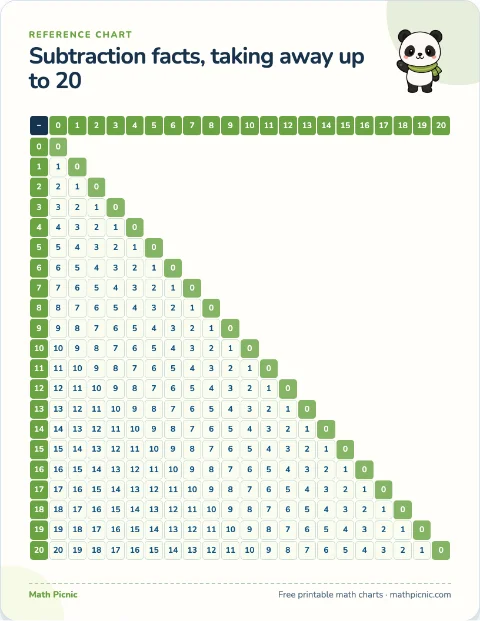 Print Find the top number down the side, the number taken away across the top.
 - Multiplication table
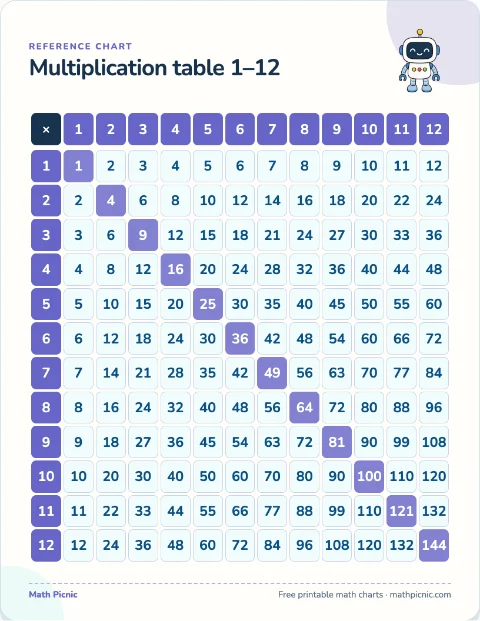 Print Read a row across and a column down to the square where they meet.
 - Division table
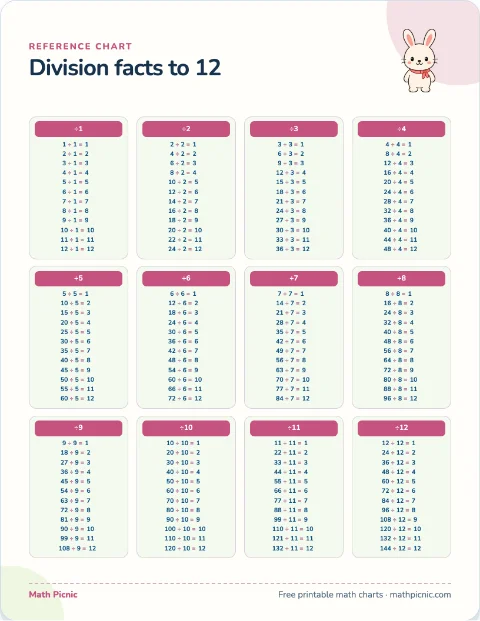 Print Find the family being divided by, then read down it to the answer.
 - Roman numerals
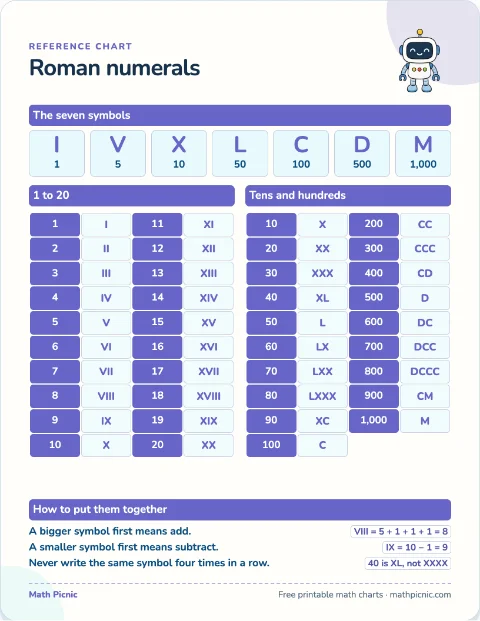 Print Build or read a numeral using the seven symbols and the three rules.
 - Multiples chart
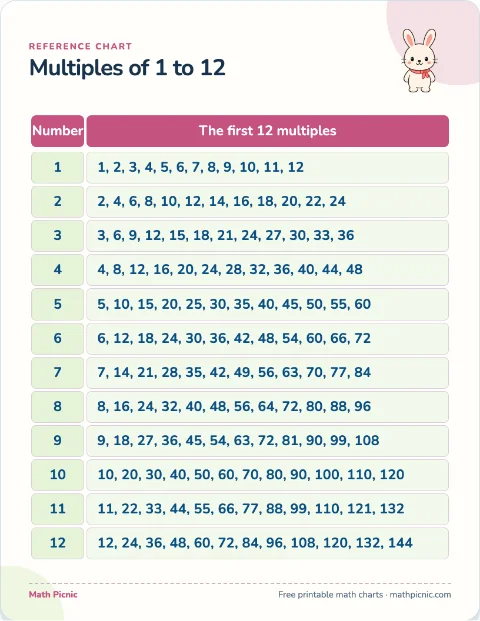 Print Run a finger along two rows until the same number appears in both.