
Money
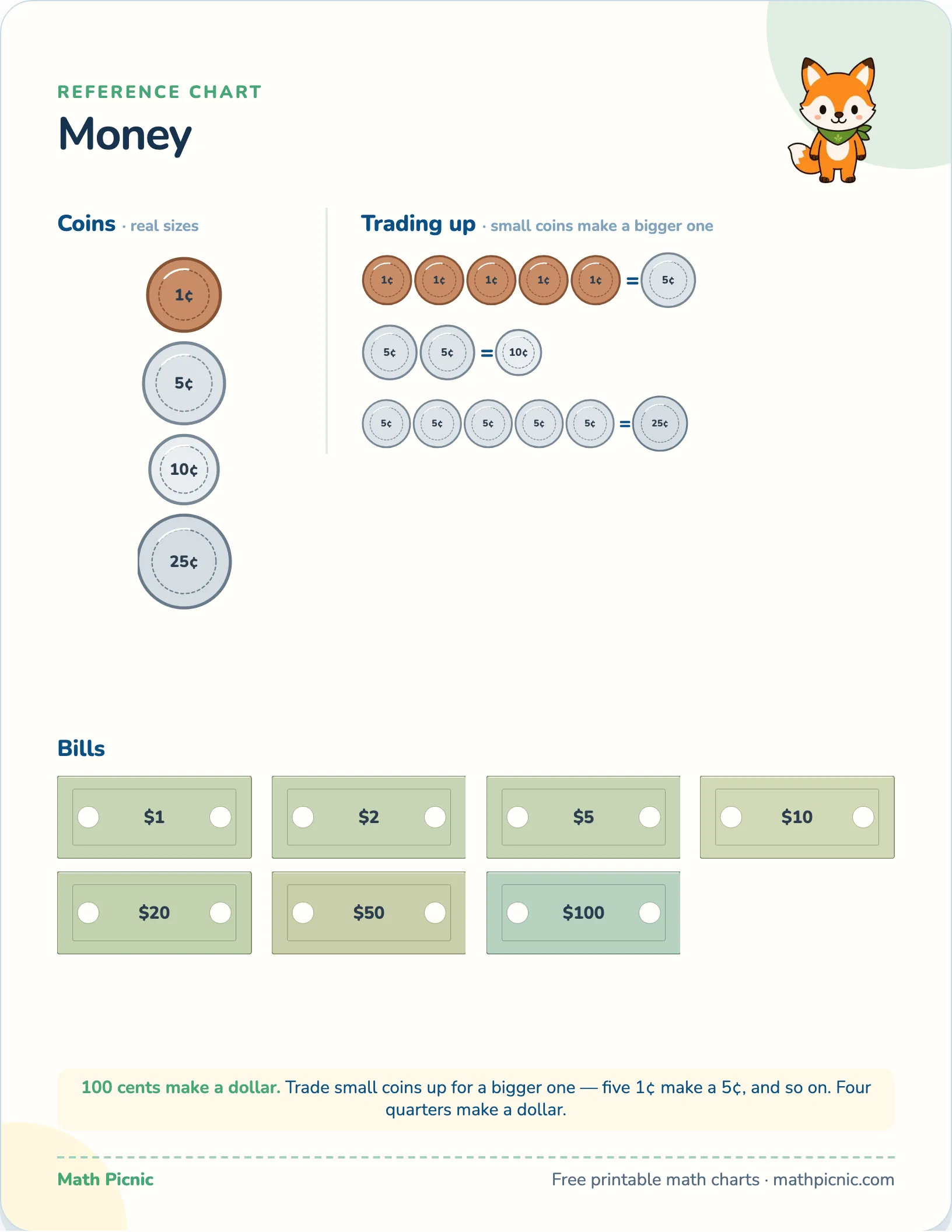
The coins and bills a child handles, drawn at their real sizes with their values, and the trades that turn small coins into bigger ones: five 1¢ make a 5¢, and so on. Pick US, Canadian, or euro money in the maker.
Reference chart
Money

Coins · real sizes
Trading up · small coins make a bigger one
Bills
100 cents make a dollar. Trade small coins up for a bigger one — five 1¢ make a 5¢, and so on. Four quarters make a dollar.
What's on this chart
Coins are learned by two things at once — how they look and what they are worth — and this chart keeps both together, drawn the same as on the worksheets. They sit side by side at their true sizes, which shows the fact a table of numbers hides: bigger is not always worth more. A dime is worth more than a nickel yet is the smaller coin, and seeing that is what makes counting change stop being a guess.
Why this chart helps
Trading up is the idea the chart is built around. Money is grouped: five 1¢ make a 5¢, two 5¢ make a 10¢, and on up until a hundred cents make a dollar. A child who can swap a handful of small coins for one bigger coin is doing the exchange that every count and every bit of change rests on — so each trade is drawn with the real coins rather than stated as a rule.
More printable charts
- Hundreds chart
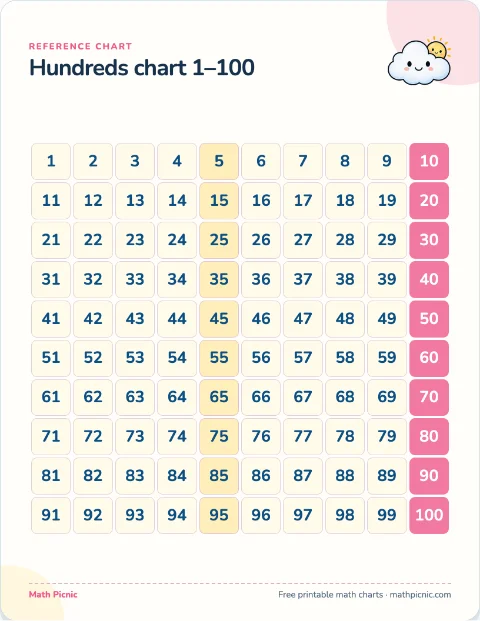 Print Count, skip count, or add ten by moving one square straight down.
 - Addition table
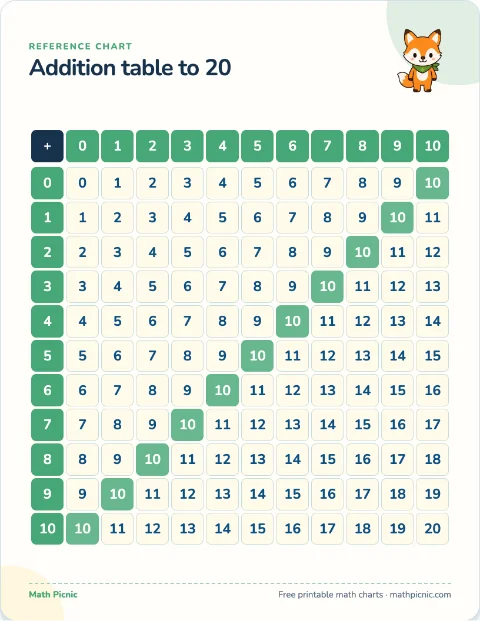 Print Follow a row and a column to the square where the two numbers meet.
 - Subtraction table
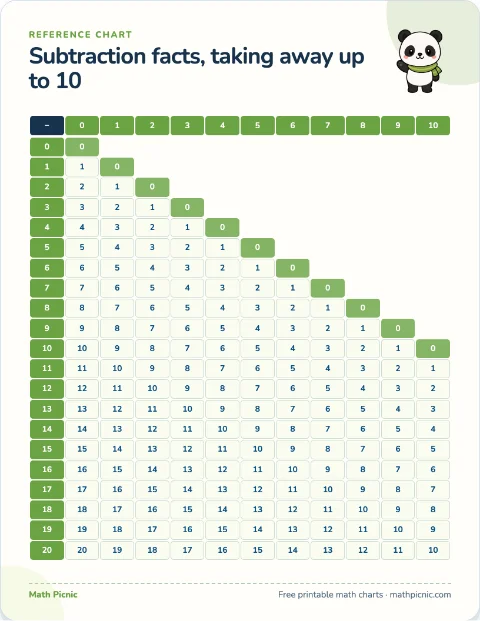 Print Start on the number being taken from, then read across to what is taken away.
 - Subtraction table to 20
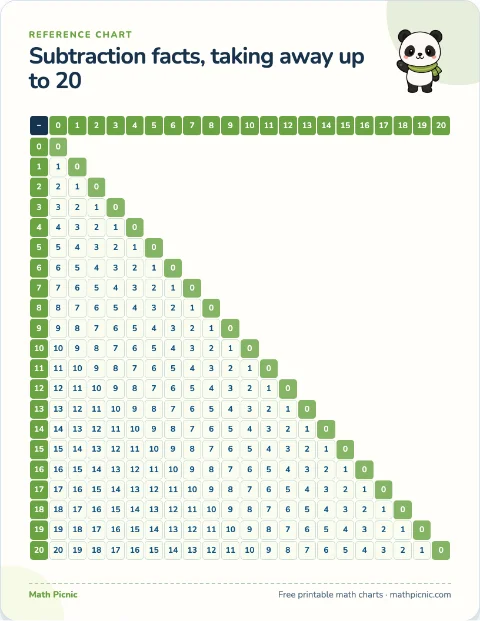 Print Find the top number down the side, the number taken away across the top.
 - Multiplication table
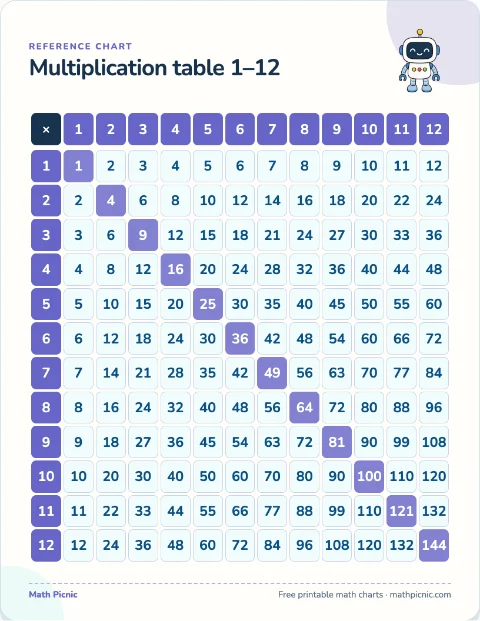 Print Read a row across and a column down to the square where they meet.
 - Division table
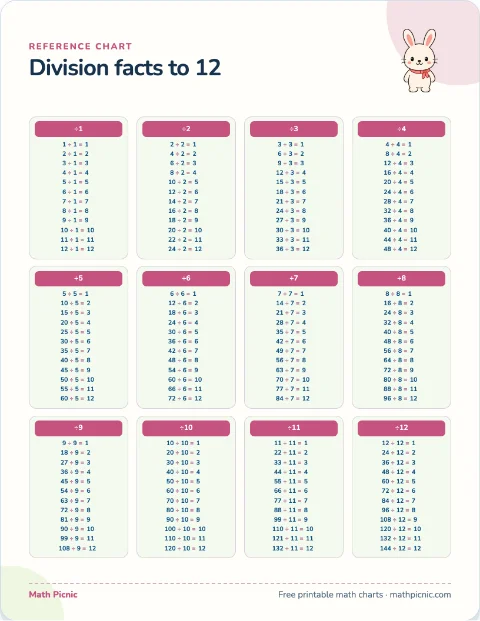 Print Find the family being divided by, then read down it to the answer.
 - Roman numerals
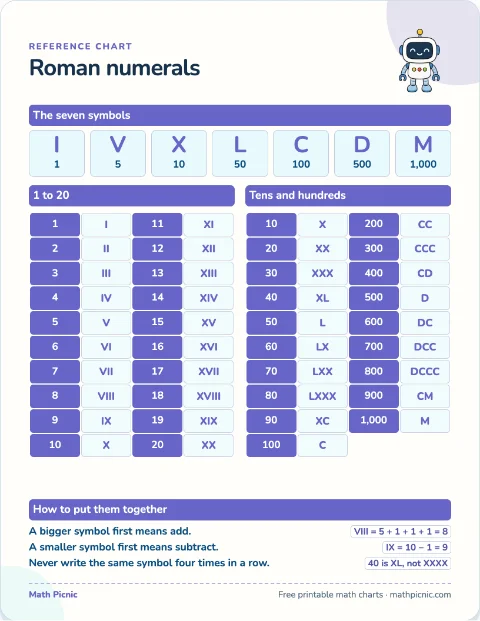 Print Build or read a numeral using the seven symbols and the three rules.
 - Multiples chart
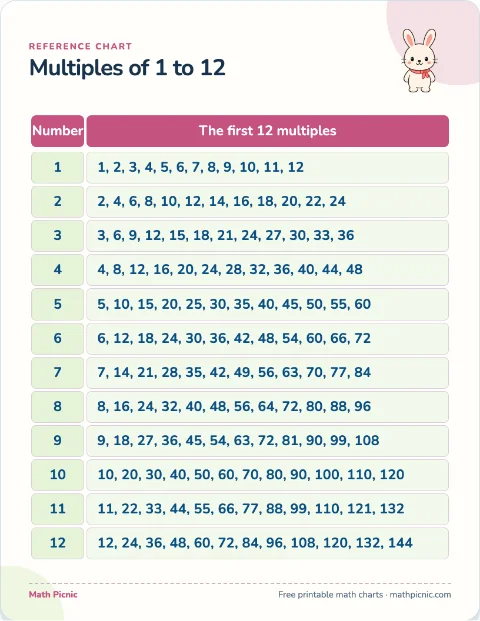 Print Run a finger along two rows until the same number appears in both.